


2026 Best Brain Games for Kids & Families — Low-Stimulation, No Pay-to-Win
Have you noticed your child becoming increasingly restless after playing iPad games — always needing "the next, more exciting thing"? That's not a child problem. That's game design working exactly as intended.
Modern commercial games are engineered to maximize retention and monetization: random reward mechanics (gacha) that trigger dopamine loops, progress walls that pressure purchases, daily quests that manufacture anxiety, and battle passes that create FOMO. These systems are hard enough for adults to resist. For children aged 3-8, whose prefrontal cortex — responsible for rational judgment and impulse control — is still developing, these stimulation patterns can leave lasting neurological imprints.
MeTool's puzzle games were built on a different premise: games should serve fun and growth, not commercial retention.
Why I Built These Games — A Story from a Father of Three
I'm a father of three children. When my kids were 3 to 5 years old, they loved playing games. At first I didn't think much of it — until I started watching them closely. The frustration after a failed gacha pull. The anxiety when a "limited-time event" countdown appeared. The intense protests when I tried to end a session. These were not emotions a 5-year-old should be experiencing around a game.
With a software development background, I recognized immediately: these weren't my children's problems. These were game mechanics working exactly as designed. Every gacha pull, every "just barely out of reach" upgrade, every "your friend just reached level 5" notification — these are variable reward mechanisms, identical in principle to slot machines, and disproportionately effective on developing brains.
I didn't want my children's habits and impulse control shaped by engineered stimulation before their prefrontal cortex had a chance to develop. I wanted to give them something different: games that genuinely exercise thinking — Go and Gomoku for strategic reasoning, Sudoku for logical deduction, Maze for spatial navigation, Snake for hand-eye coordination. Games with a clear endpoint (you win or you lose), not infinite "just-one-more" loops. Games where failure is just part of learning, not a trigger for a "pay to revive" prompt.
That's how MeTool's puzzle game collection was born. Every game is completely free, no in-app purchases, no data collection — just pure play.
What Makes a "Low-Stimulation" Puzzle Game Different
"Low-stimulation" doesn't mean boring — it means the game doesn't depend on artificial high-intensity triggers to sustain engagement. Here's what that looks like in practice:
Natural rewards, not engineered ones: When you beat an AI opponent in Go, that win comes from genuine cognitive improvement — not from a rare item you pulled from a gacha. This "natural reward" builds intrinsic motivation in children, rather than training them to depend on external stimulation.
No manufactured anxiety: There are no "limited-time events," no "this reward disappears tomorrow," no "your friend already reached level 5" social pressure notifications. Children can quietly focus on the game itself, without being bombarded by external urgency.
Clear boundaries: A Sudoku puzzle either gets solved or it doesn't. A Go game ends with a winner. There are natural stopping points, not carefully engineered "infinite loops" designed to prevent disengagement. This helps children build healthy "start → focus → finish" behavior patterns.
Failure is learning, not punishment: In MeTool games, failing means trying again — no "you've run out of lives, wait or pay." Failure is simply part of the learning process.
MeTool 2026 Puzzle Game Collection
All games below run free in your browser — no download, no registration:
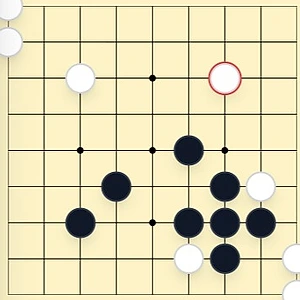
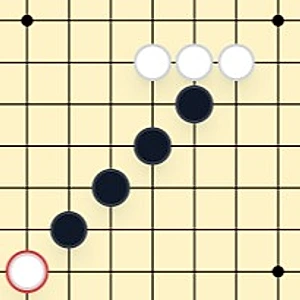
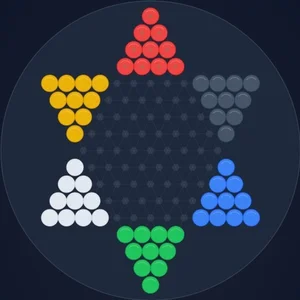
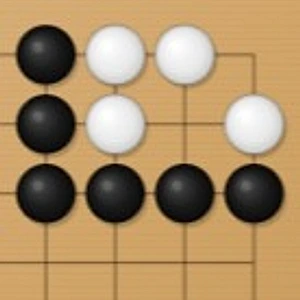
Strategy board games: Go (9×9/13×13/19×19 boards, three AI difficulty levels), Gomoku (AI opponent, optional forbidden moves), Chinese Checkers (up to 6 players/AI). These build strategic thinking and patience.
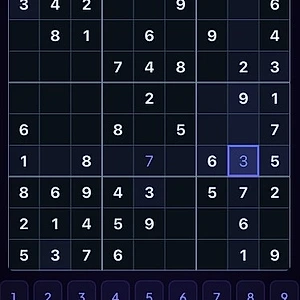
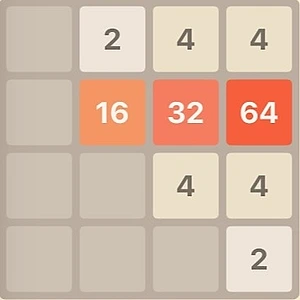
Logic & reasoning: Sudoku (four difficulty levels, candidate number assistance), 2048 (tile merging, builds number sense). Develops logical reasoning and mathematical intuition.
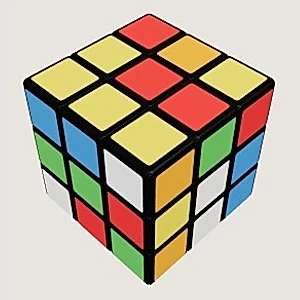
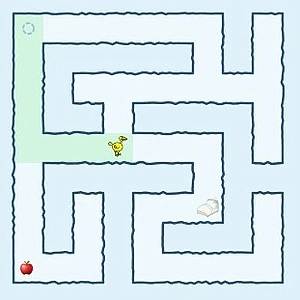
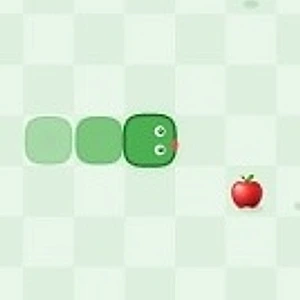
Spatial & coordination: Duck Maze Adventure (randomly generated mazes, 4 difficulty levels), Snake, Rubik's Cube (2×2/3×3/4×4, true 3D rendering). Sharpens spatial perception and hand-eye coordination.
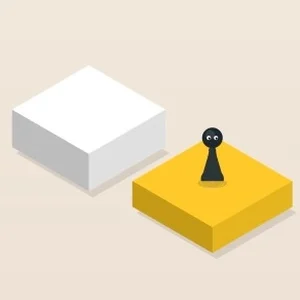
Casual brain games: Jump Jump (charge-and-launch mechanics + missile easter egg), Solar In Hand (interactive 3D solar system). Great for all ages as relaxing mental play.
The collection will keep growing. If there's a game type you'd like to see, reach out through the contact link in the footer.