Solutions
Start from a real-life or work pain point and solve it step by step with the right tool.
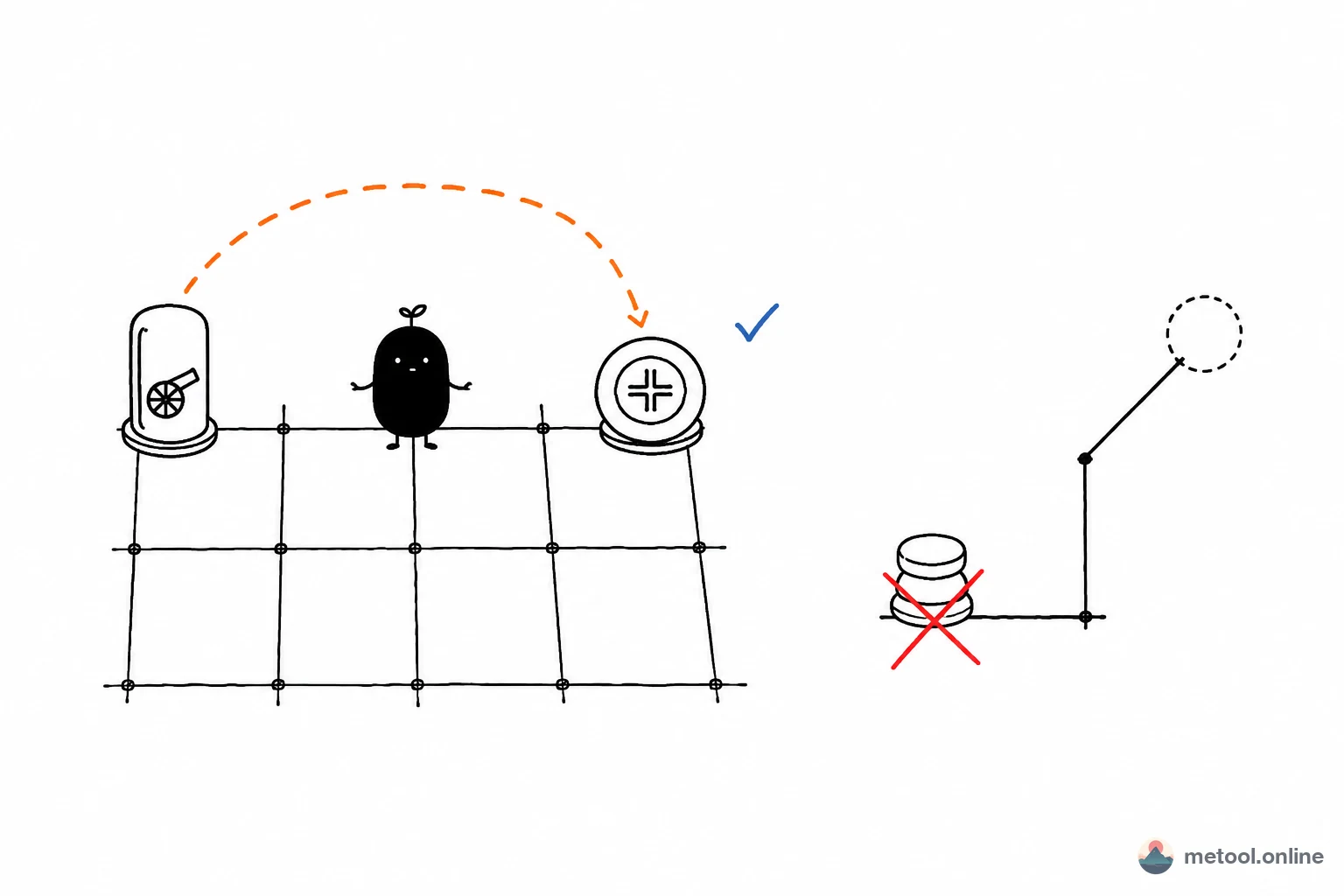
Horse-behind-Cannon, the hobbled Horse, and the Cannon platform
The three Xiangqi rules players mix up most: a Cannon captures only with exactly one piece in between, a Horse can be blocked on its first step, and why Horse-behind-Cannon sometimes mates. Includes a check table and a layout sequence.
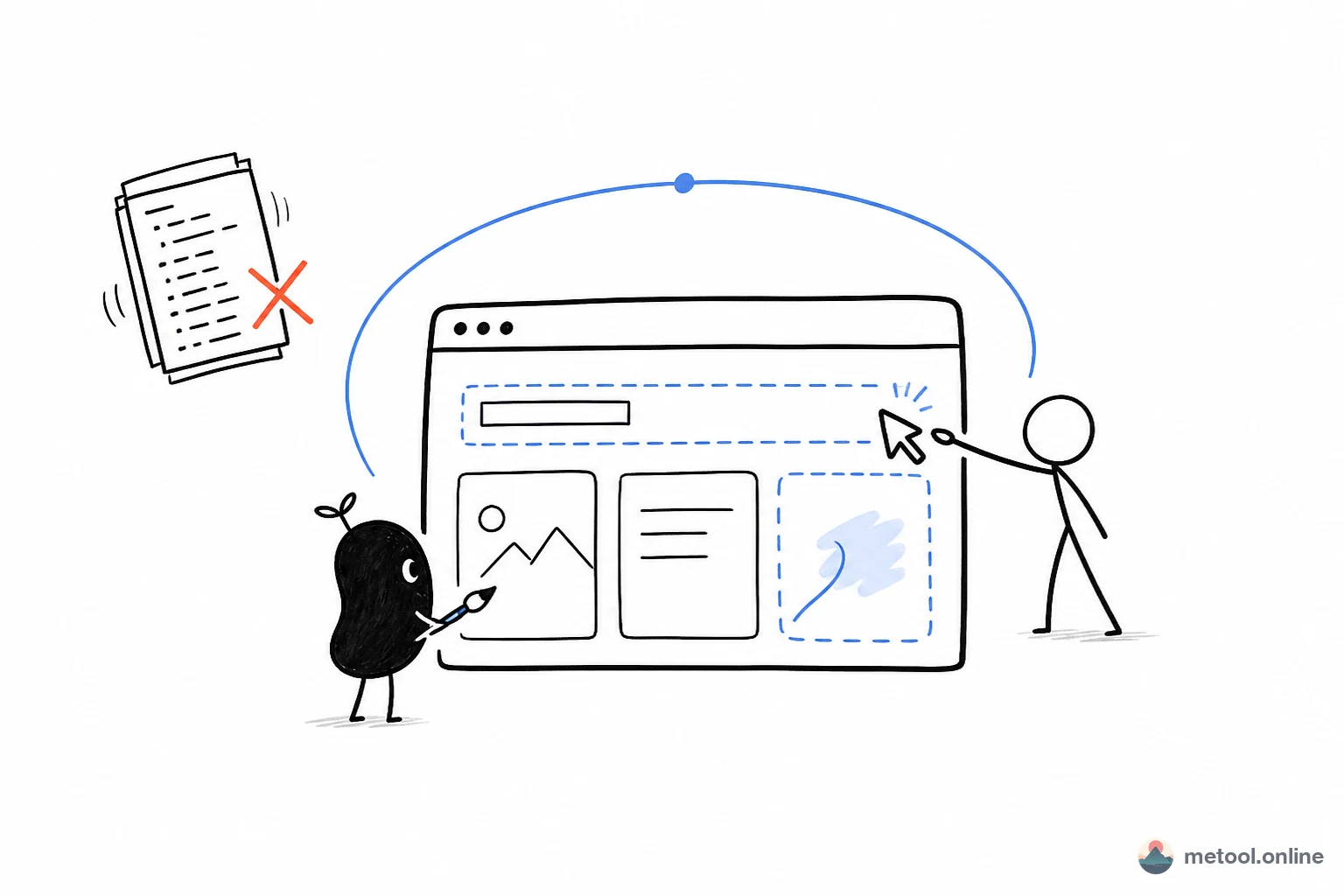
How do I let AI change a webpage and see the result as it writes?
Large HTML edits that only live as source in chat hide layout until round N. This article covers how your current AI writes into the visual editor you have open, why changes should be batched into as few writes as possible, and when to click small edits versus cowrite structure.
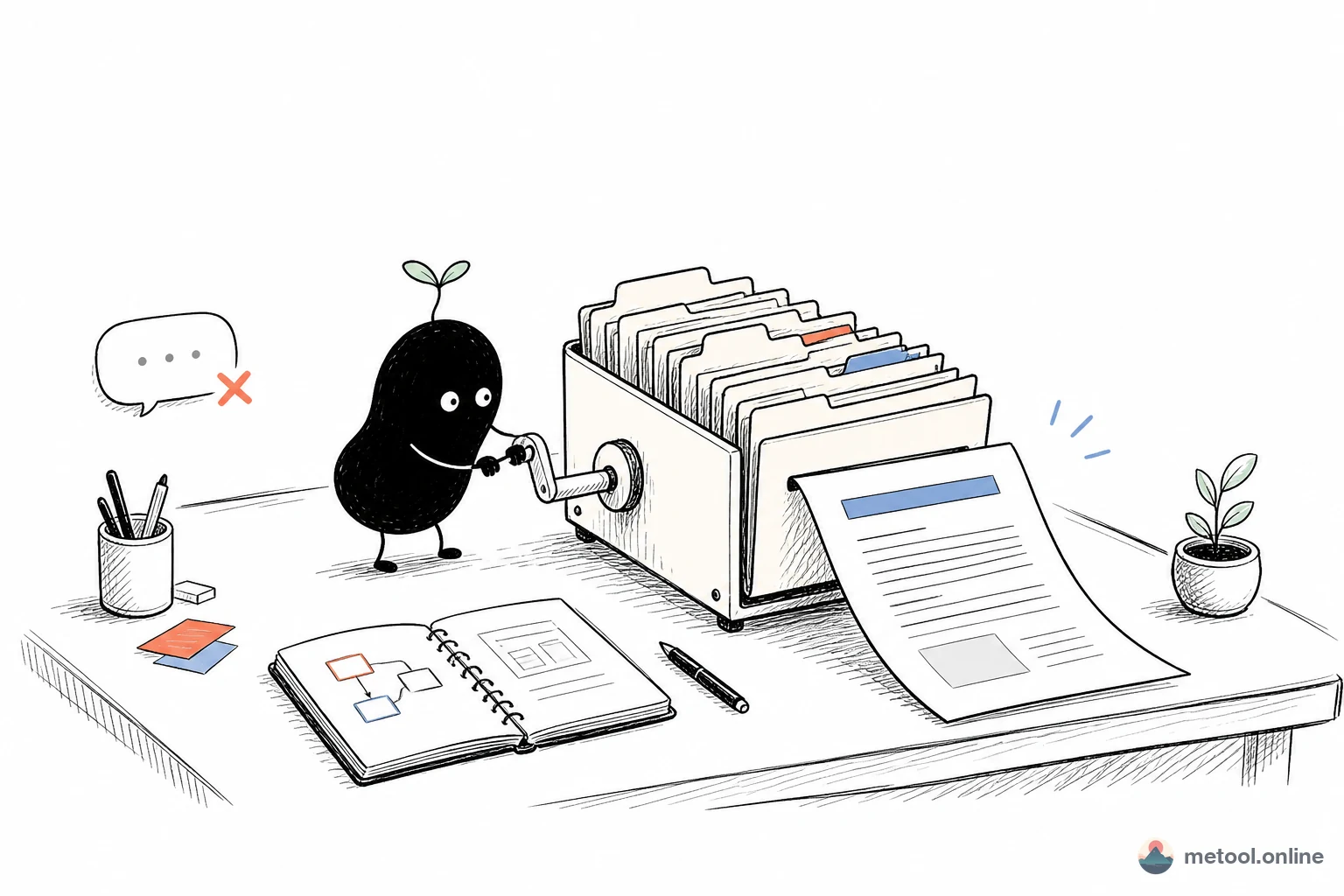
How do I let AI edit a LaTeX paper and compile it on the same page?
A paper is a multi-file project: body, bibliography, template each in place. This article covers how your current AI edits the open .tex project, when to trigger compile, why binary images cannot travel through chat, and where online cowriting stops and local TeX Live begins.
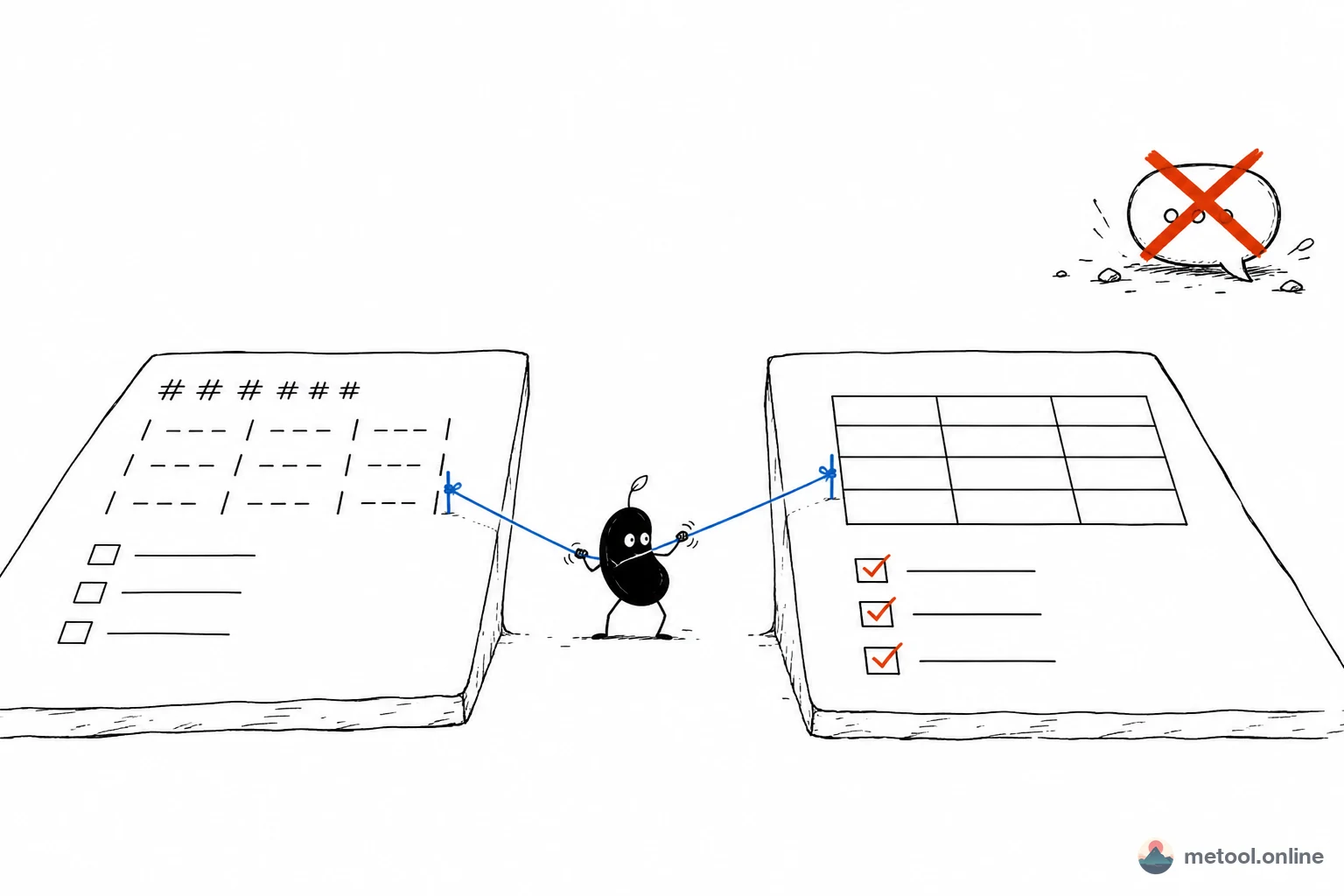
How do I let AI write Markdown and see the layout at the same time?
Tables, task lists, and code fences are only symbols in chat. You only know if they break after they hit an editor. This article covers why you cowrite the same .md in a live preview, and why a local replace beats overwriting the whole draft.
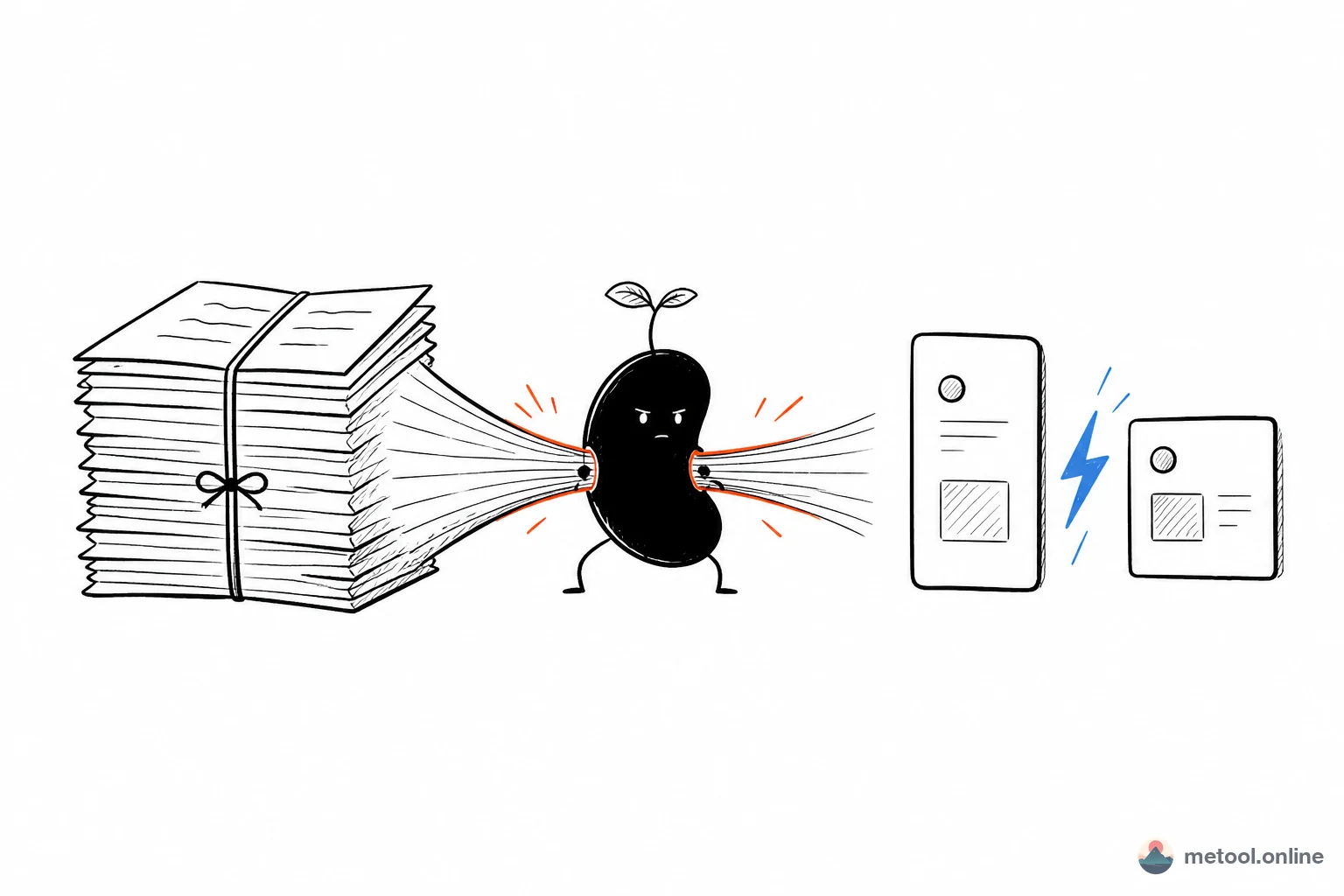
How do I turn a Markdown doc into knowledge cards with AI?
SOPs, tutorials, and meeting notes are already structured — posting them still means a redesign. This article covers which card ratios fit explainer docs, and how your current AI lays out the preview page while you sign off on each card.
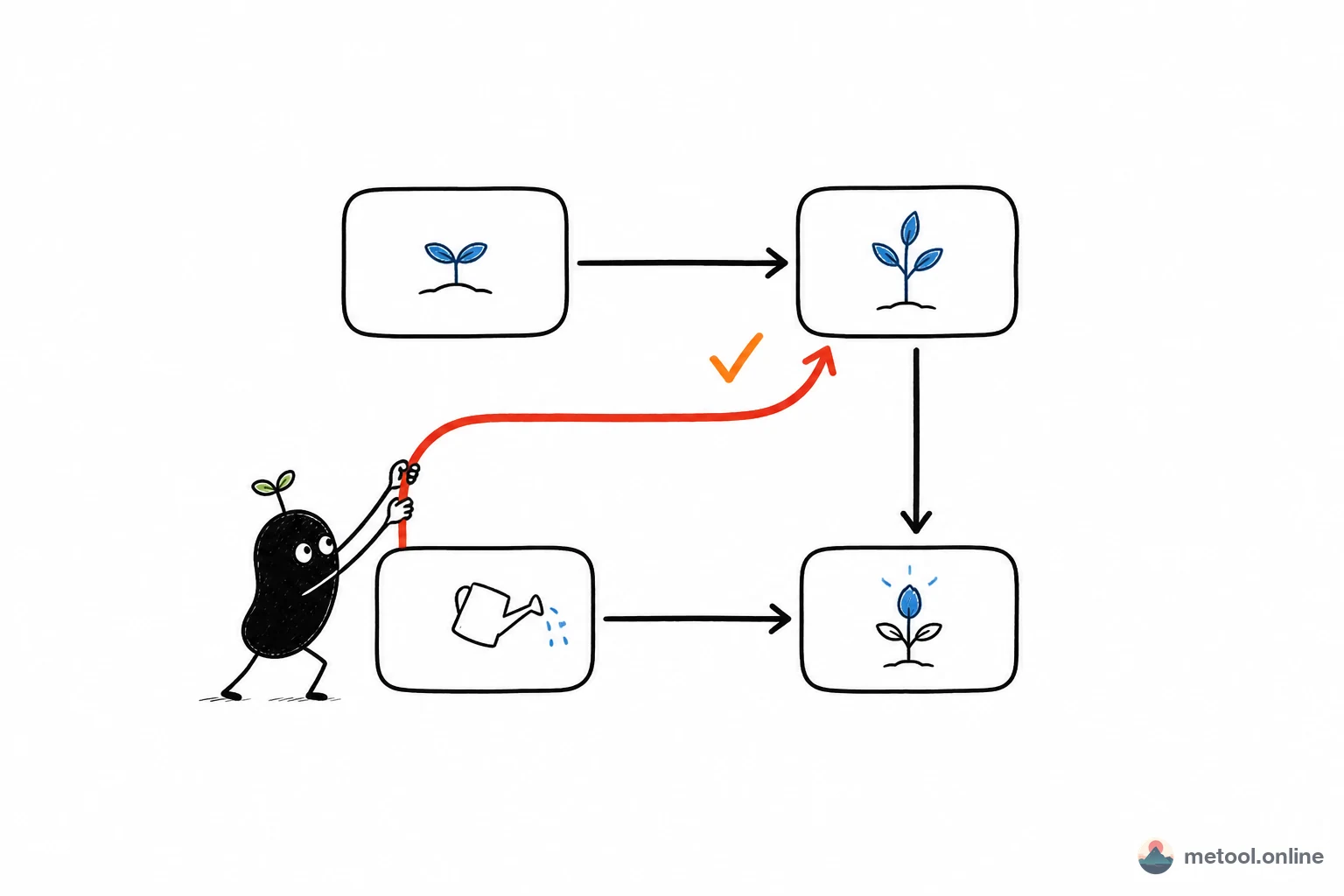
The AI flowchart is wrong — how do I fix it against the preview?
Models often emit Mermaid that parses, then arrows wrap the wrong way and nodes pile up. This article covers why a flowchart has to be edited against the render, how your current AI should change only one stretch of source, and which diagrams should not go to auto-layout.
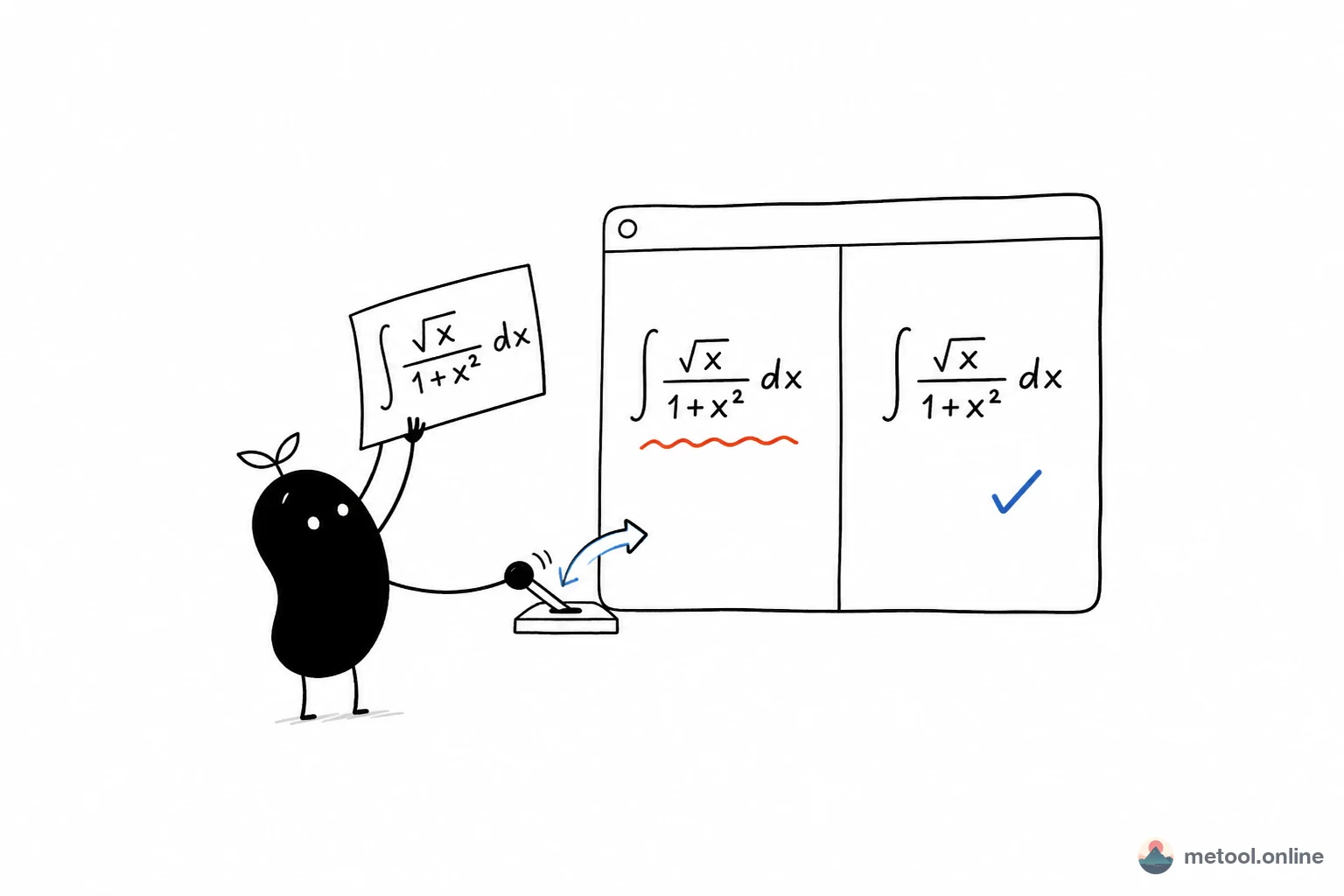
I can't write LaTeX — how do I let AI write a formula and check it immediately?
Models can emit commands for homework and papers, then wrap dollar signs or pick the wrong environment. This article covers how to make AI output one expression, catch KaTeX errors on a live preview, and what a single-formula tool owns versus a full paper compile.
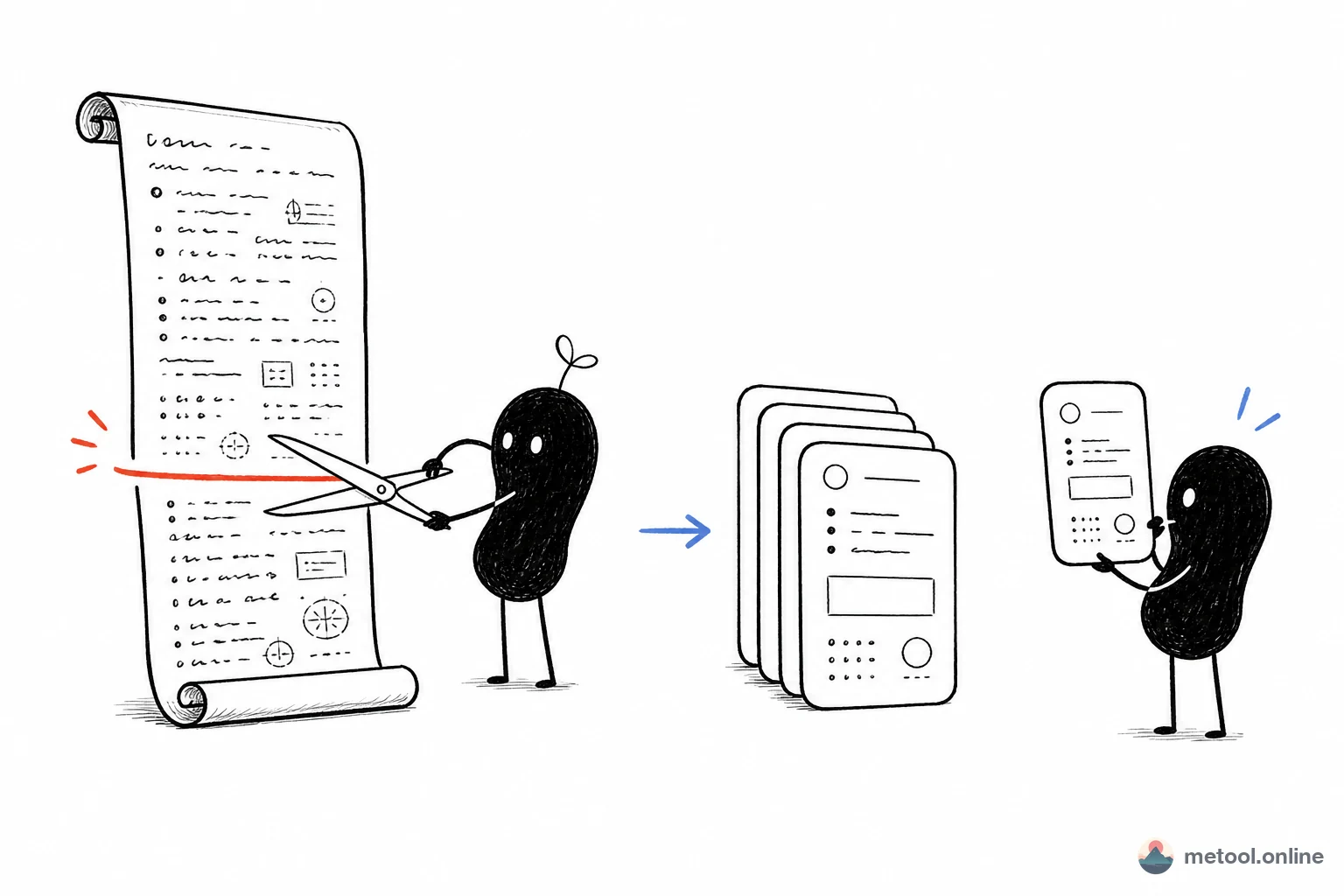
Long notes into Xiaohongshu cards — how do I edit while I watch?
The hard part of turning Obsidian notes into Xiaohongshu (Little Red Book) cards is pagination and tone — you can only judge those on the card preview. This article covers the heading-split rule, and how your current AI edits the same page while you steer from the preview.
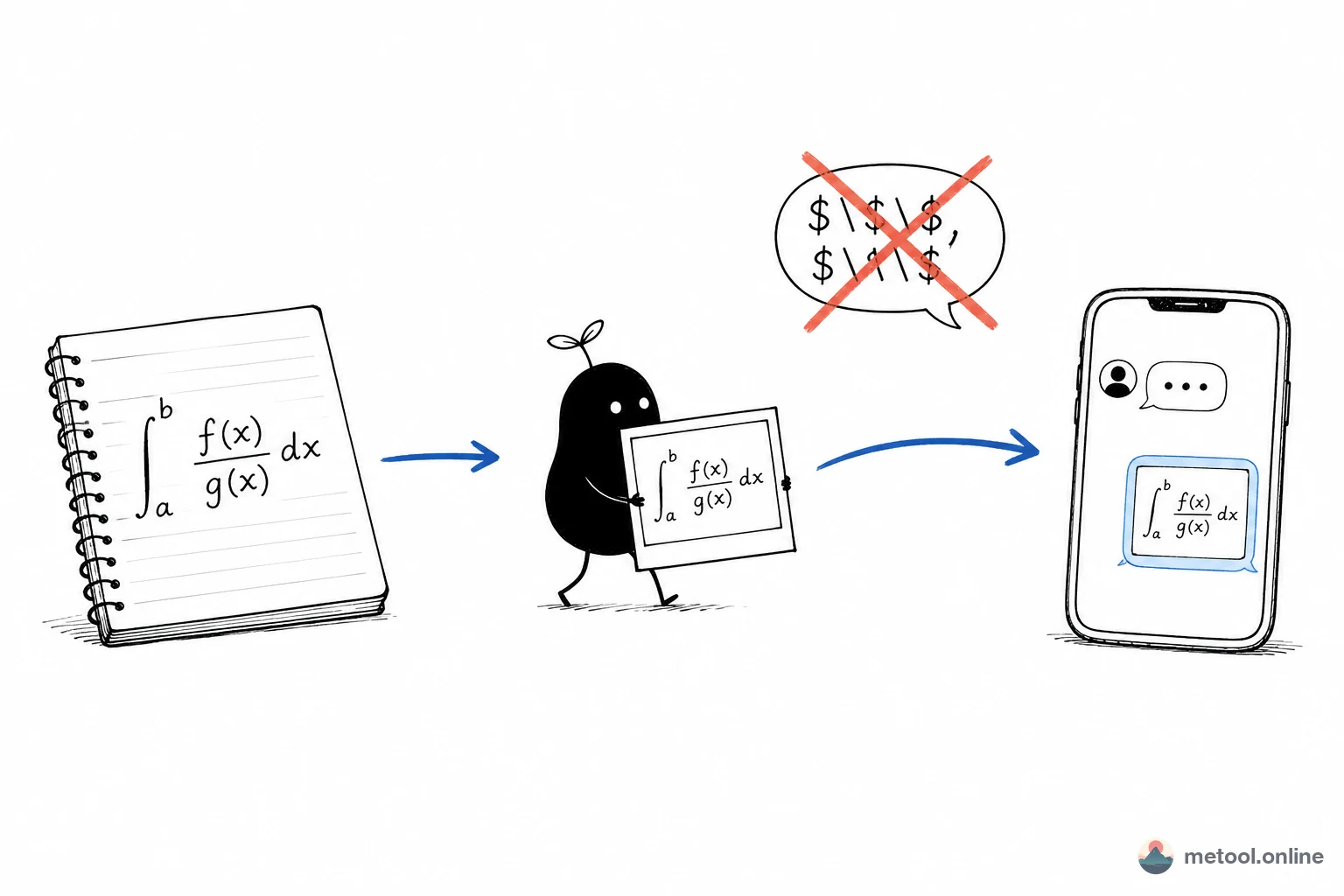
How do I send a formula from my notes without it turning into code?
A formula looks fine in Obsidian or Typora, then turns into $...$ in Slack, chat, or an LMS box. Receivers often do not render LaTeX. Pull that one expression, preview it, then export PNG or SVG.
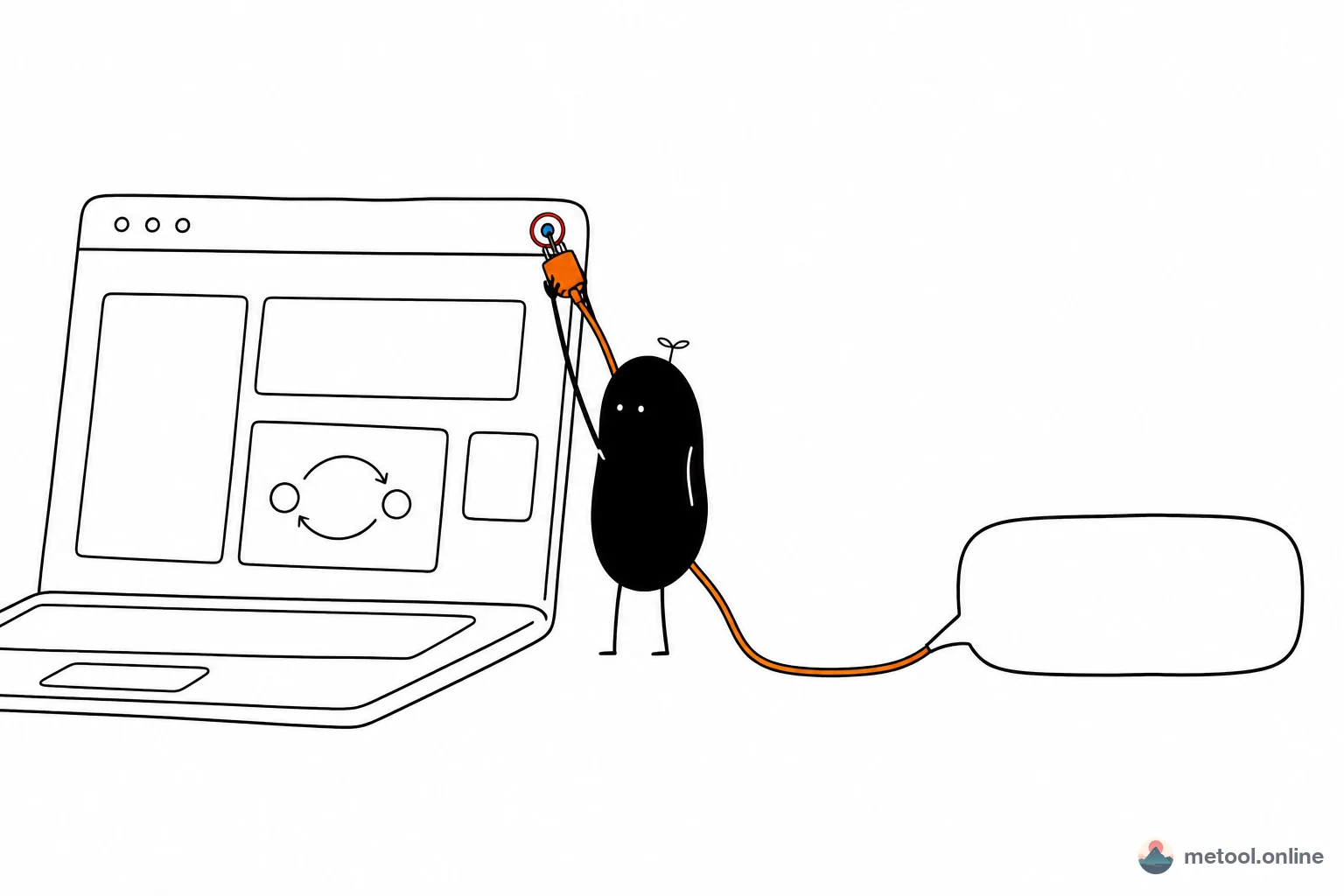
How do I let my current AI operate a web tool?
Human–AI cowriting only works if the assistant is aimed at the current page. This walkthrough follows the real order: open a tool page, click Connect your AI, then hook in the assistant — with screenshots.
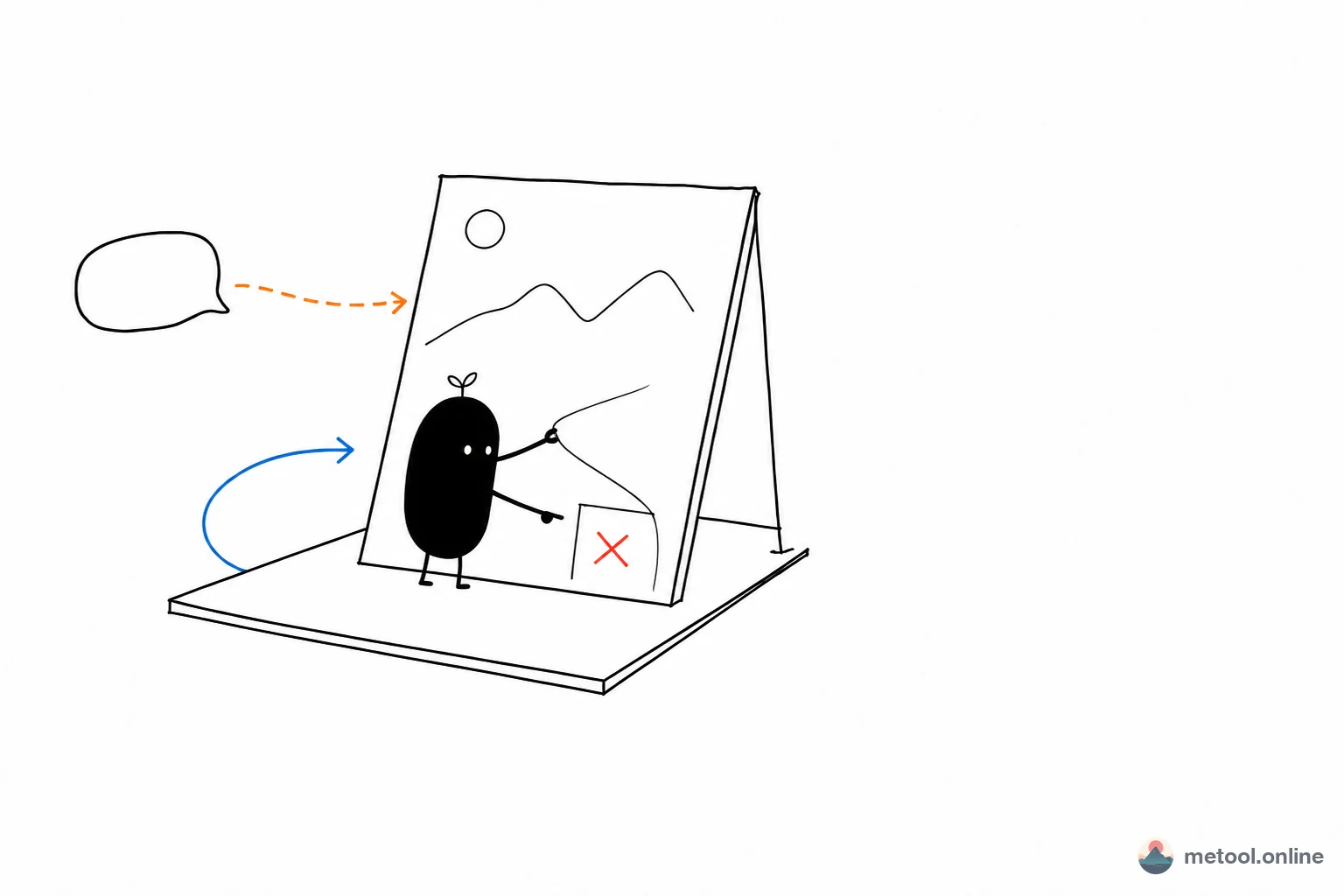
What is human–AI cowriting? Why shouldn't AI finish the work alone?
Human–AI cowriting is not handing the job to a model in the background. AI speeds production; you steer direction and details on a live preview. This article defines the idea, and why a page that takes shape in the browser — like MeTool — is a natural fit.
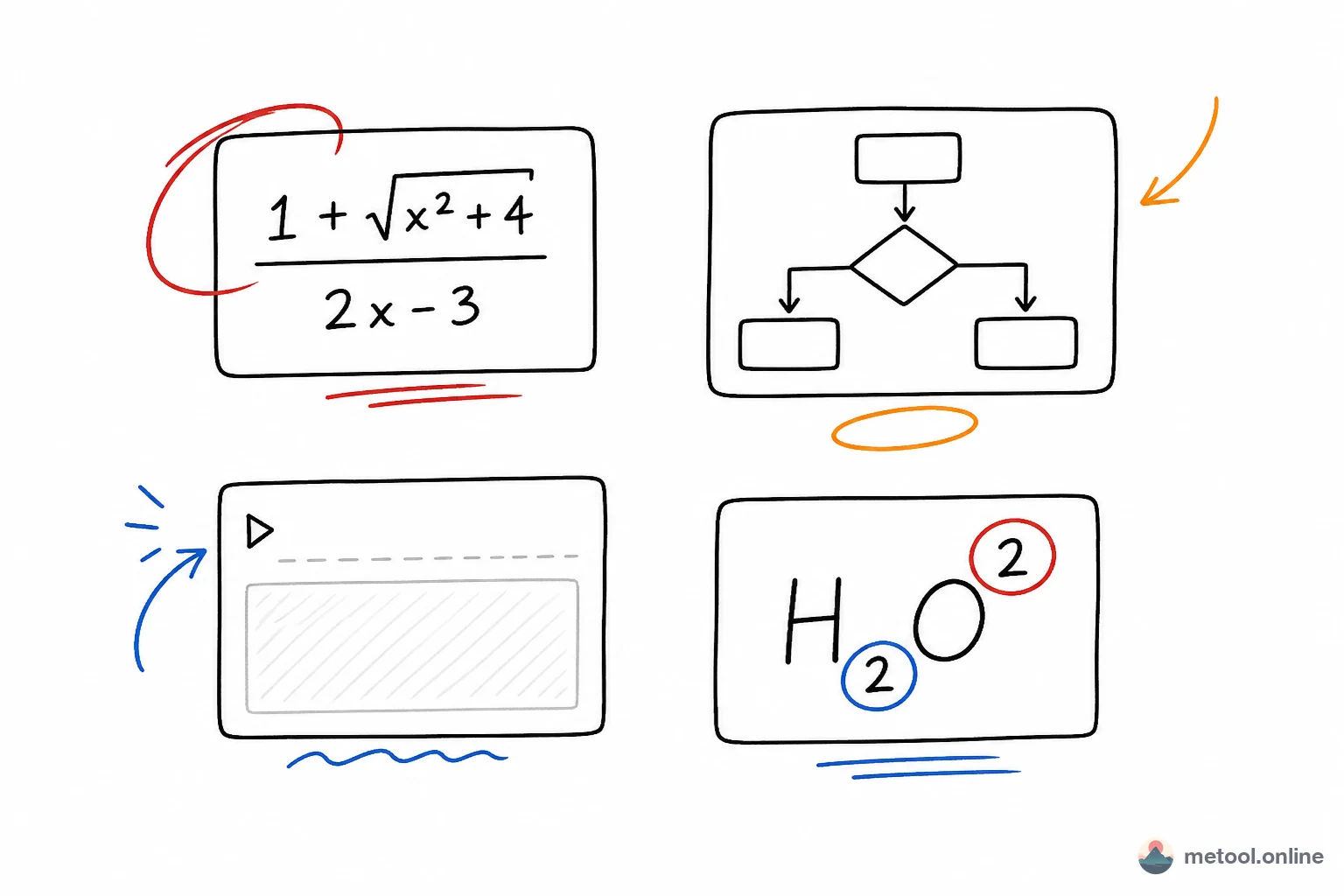
Advanced Markdown: Math, Diagrams, Collapsible Blocks, and More
Beyond headings, lists, and tables—how do you write math, draw flowcharts in text, collapse long sections, or add sub/superscripts in Markdown? This guide covers six advanced patterns with source plus real render screenshots, notes on renderer support, and examples you can paste into an online editor.
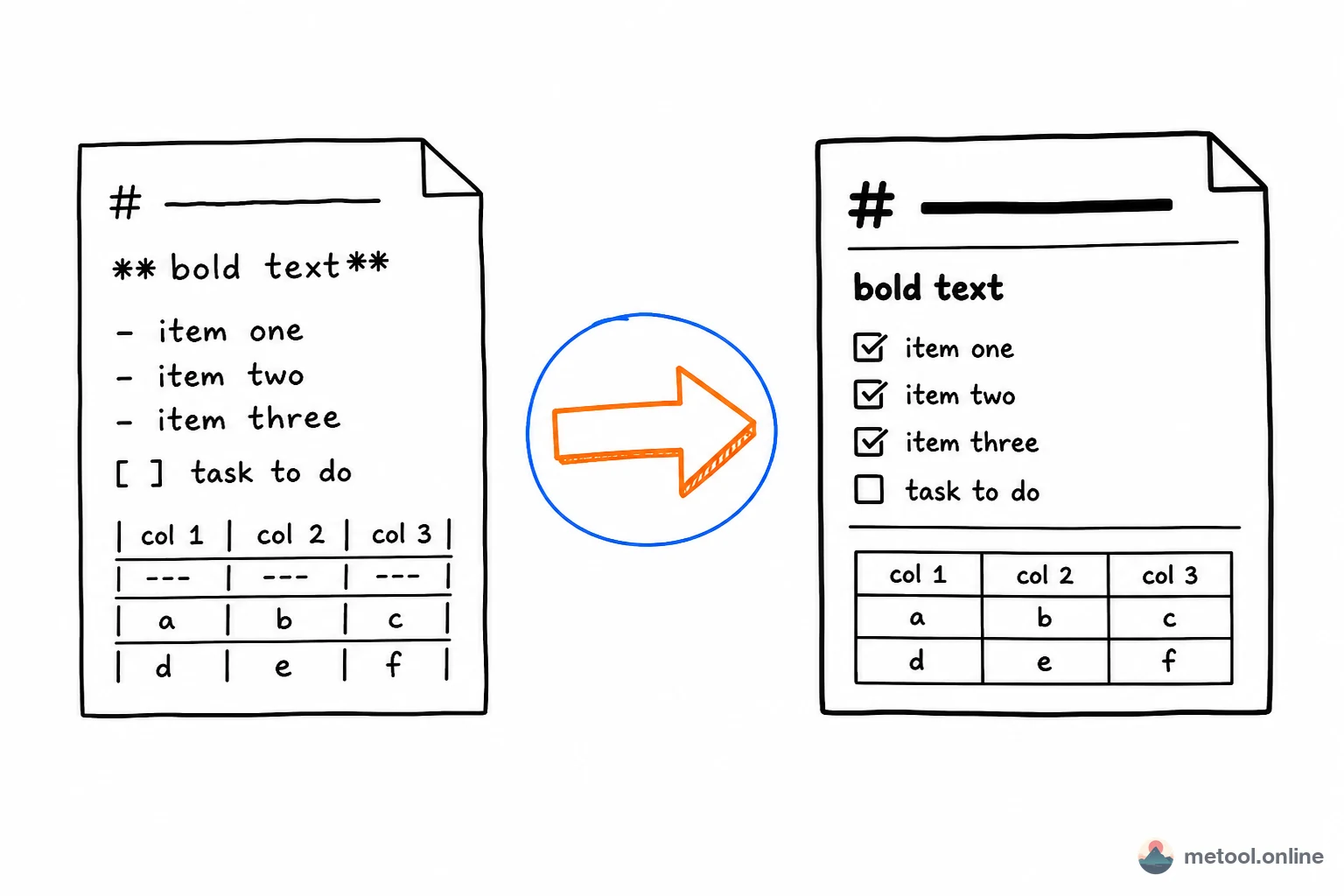
How Do You Write Markdown? 10 High-Frequency Patterns to Learn by Doing
Everyday Markdown is about ten patterns. This guide pairs source with rendered output for headings, emphasis, lists, task lists, links, images, code, quotes, tables, and rules—and lists why # stays plain text or Enter does not break a line.
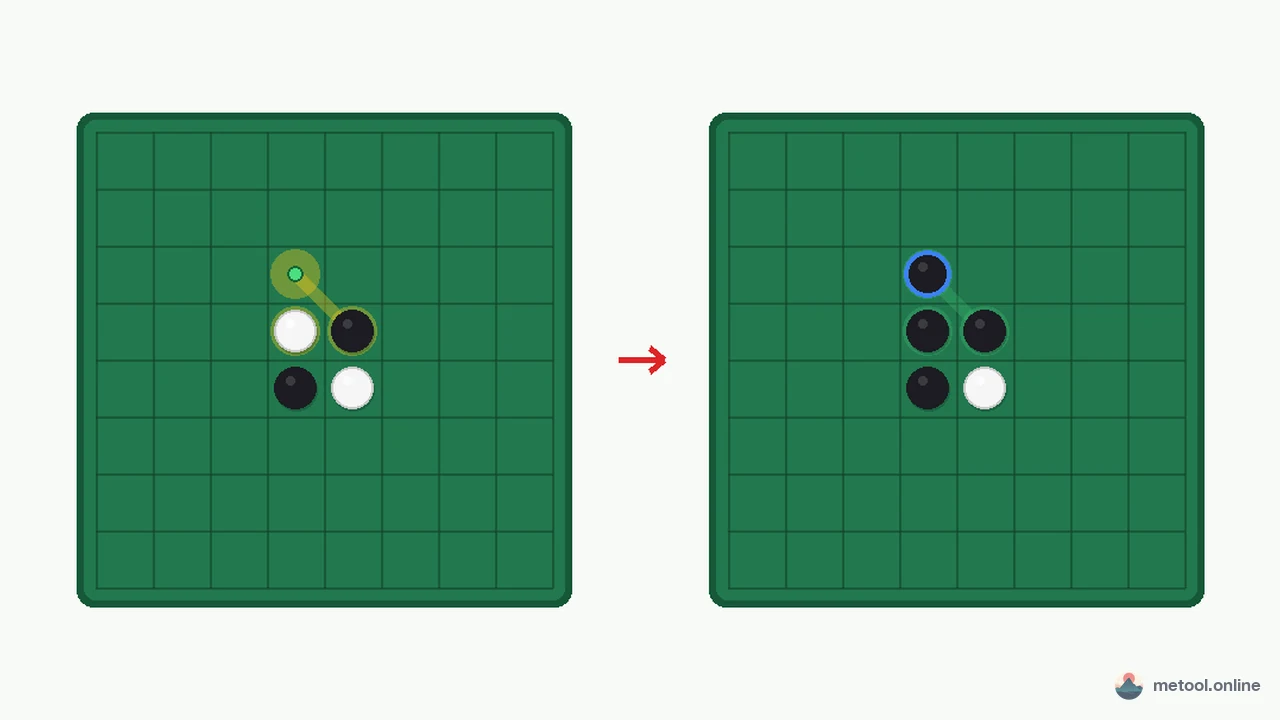
How to Play Reversi? Flips, Legal Moves, and Endgame
An illustrated guide—with teaching demo videos—to Reversi (Othello) rules: the opening four discs, how sandwich flips work, why a move must flip at least one disc, multi-direction flips, passing when you have no move, scoring by disc count, plus beginner tips on corners and X-squares.
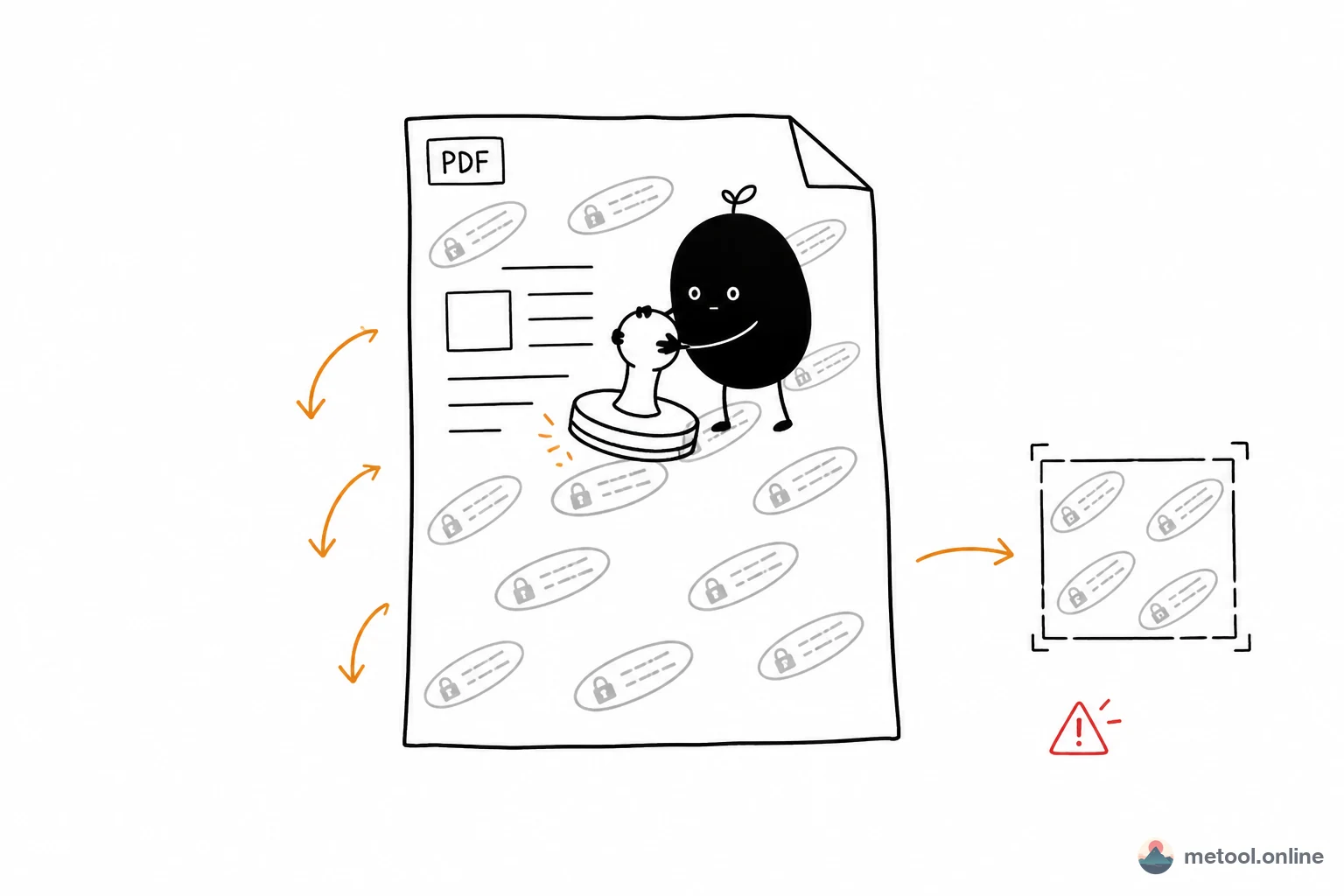
Need a “Confidential” Watermark on a Contract PDF—What Actually Works?
Before you share contracts, drafts, or course packs, a visible Confidential / Draft watermark helps. This article covers what visible watermarks prevent, when to use text vs a logo, why CJK glyphs go missing, how to choose tiling and page ranges, and what watermarks cannot do.
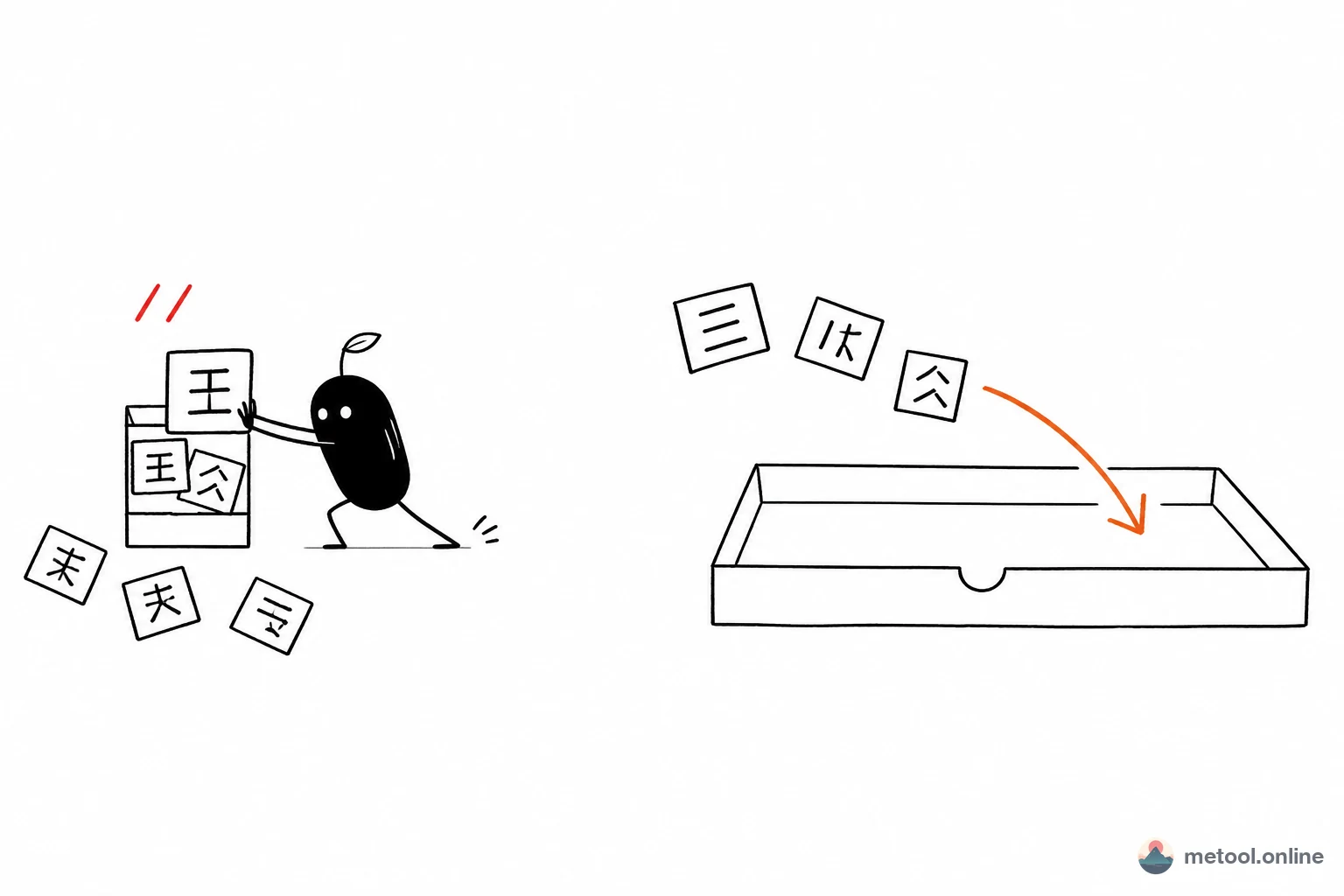
Chinese in LaTeX Comes Out Blank or Font Not Found? Check Your Engine First
Most CJK LaTeX errors aren't a package problem, they're an engine problem: pdfLaTeX's font model physically cannot hold thousands of Han characters. How the three engines differ, which ctex fontset to pick, and what font not found and ctexart.cls not found actually mean.
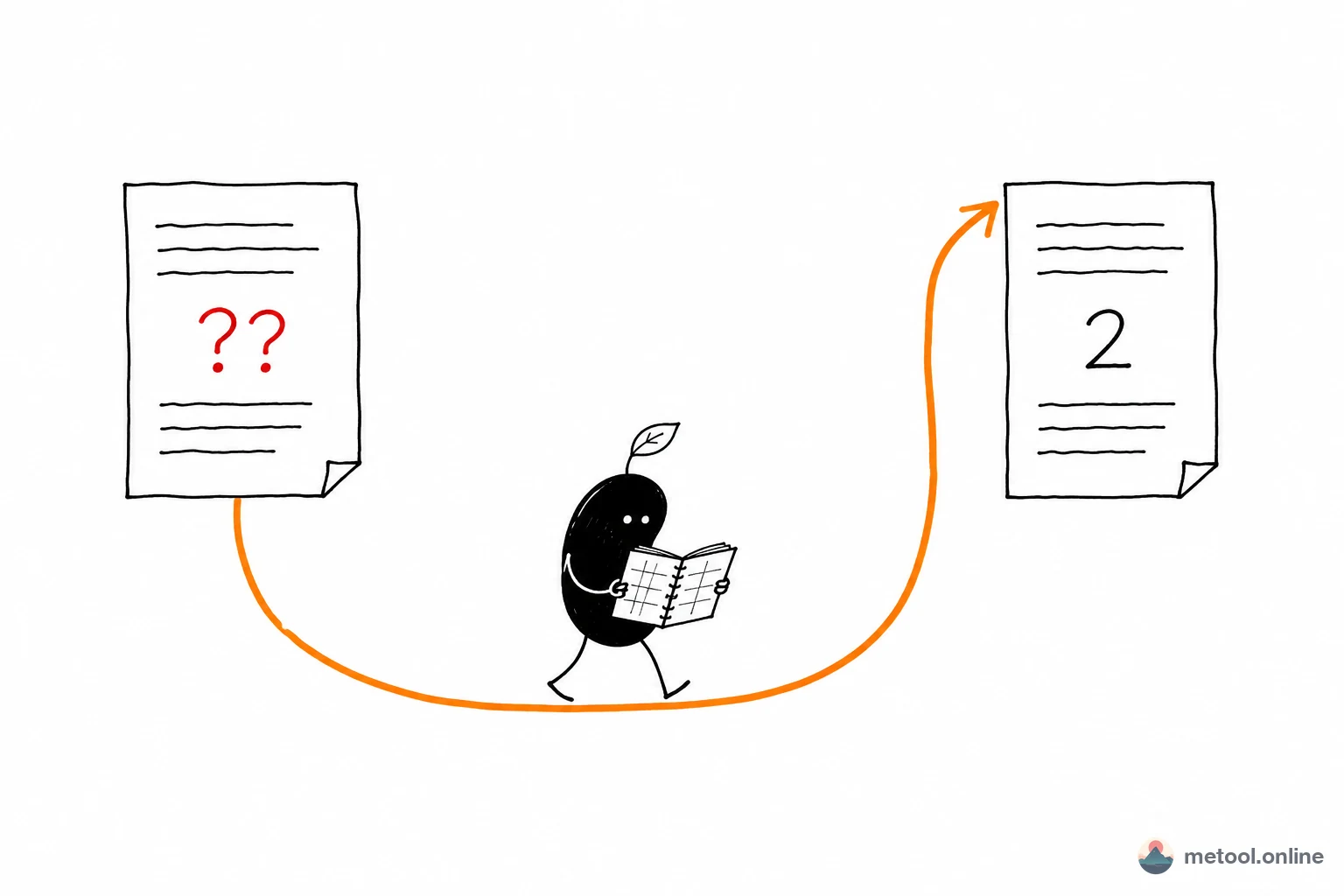
LaTeX Showing ?? and Wrong Page Numbers? You Only Compiled Once
The ?? in your PDF and the off-by-one table of contents aren't syntax errors — they mean LaTeX's multi-pass cycle hasn't finished. How .aux and .toc work, how many passes you need, why BibTeX takes four steps, and how to read the log to know you're done.
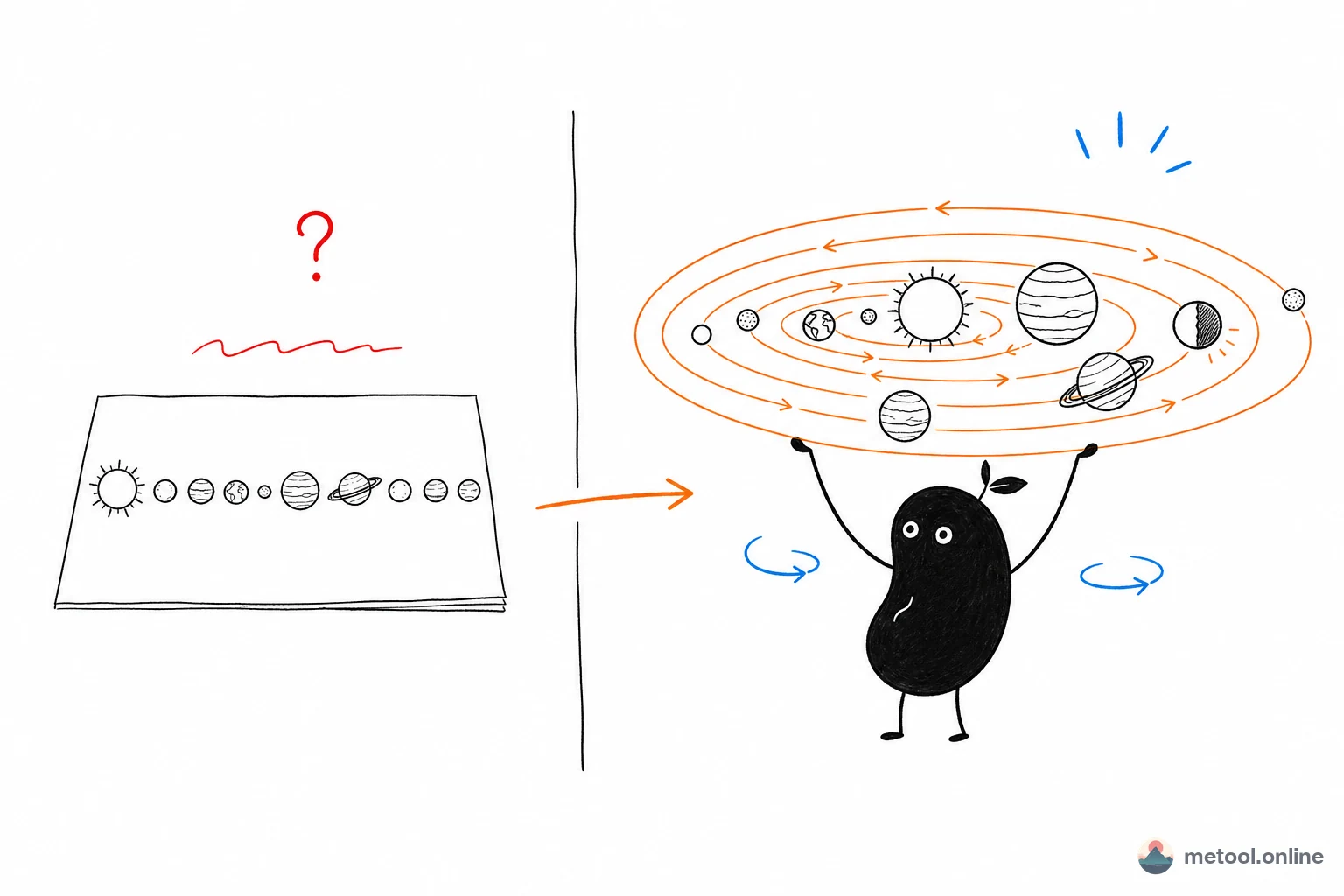
Why Textbook Solar System Diagrams Don't Stick — and How to Really Learn It
Scale, orbits, and day/night are hard to convey with a flat diagram. This post breaks down three ways textbook illustrations mislead, the intuitions you actually need to grasp the solar system, and how an interactive 3D model makes the abstract concrete.
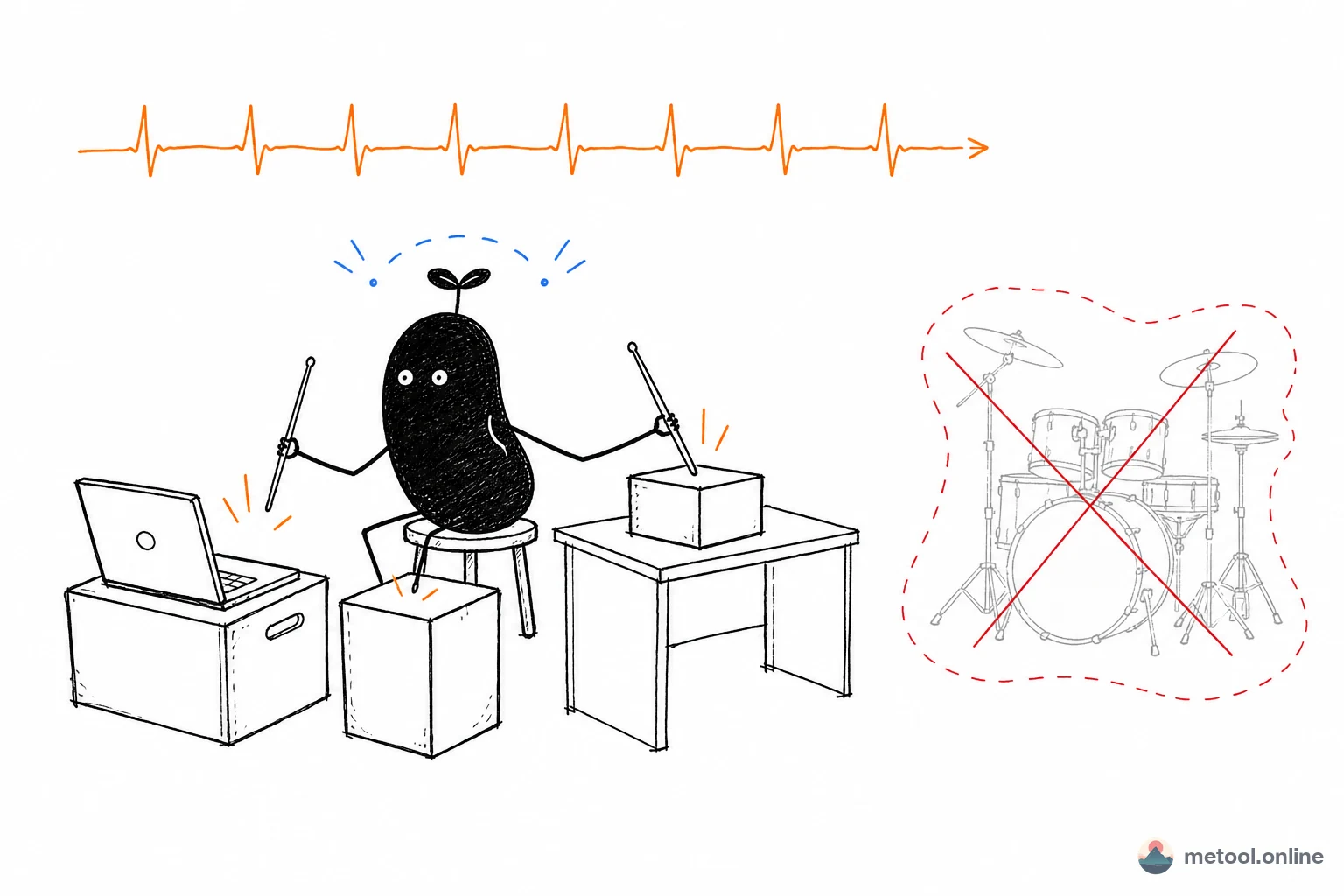
Want to Learn Drums but Have No Kit? How to Practice Rhythm at Home
A real kit is pricey and loud, and even e-drums cost a small fortune. This post explains what drumming actually trains, which skills you can build with no kit, which you can't, and how to choose by budget.
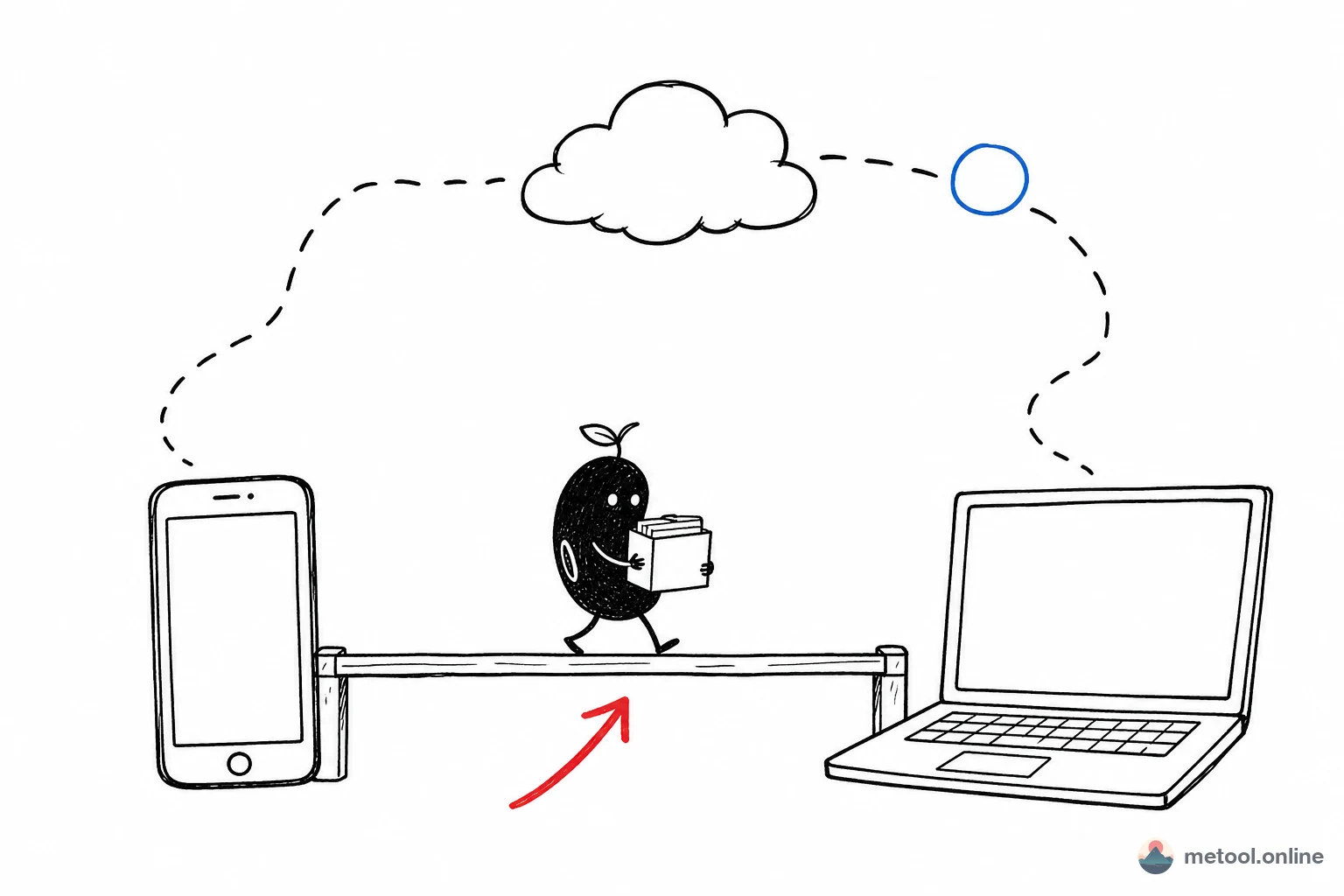
How to Send Files from Phone to PC: WiFi, Size, and Quality
Phone-to-PC transfer starts with three questions: same WiFi, file size, and whether compression is acceptable. This article routes LAN transfer, cable, chat apps, cloud, and email—and why the same WiFi still fails to connect.
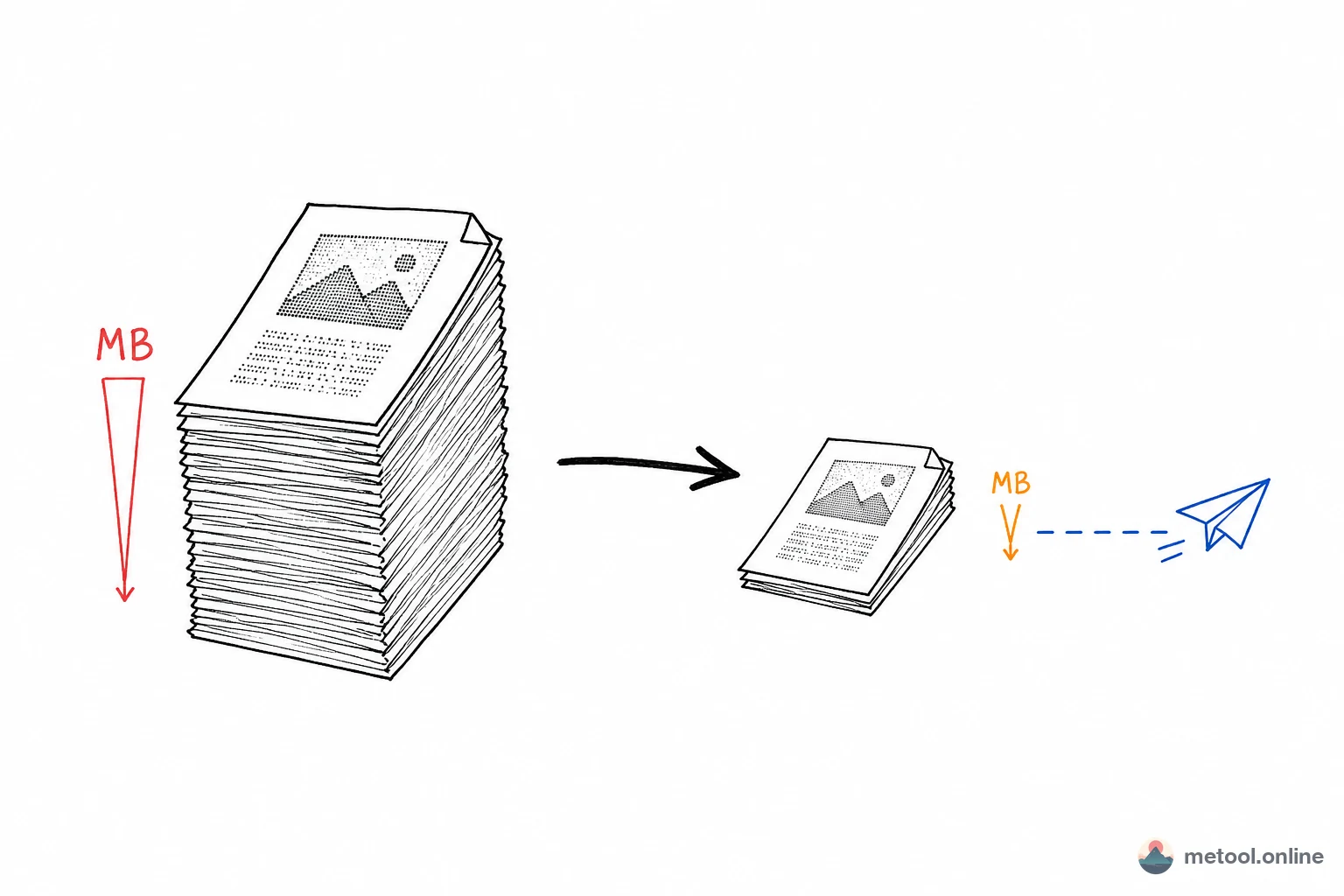
Scanned PDF Too Big to Send? How to Shrink It Down
Scanned contracts and photo PDFs often hit tens of MB—too large for email or WeChat. This article explains why scanned PDFs are so big, what compression actually removes, how small you can go without blurring, and when compression won't help.
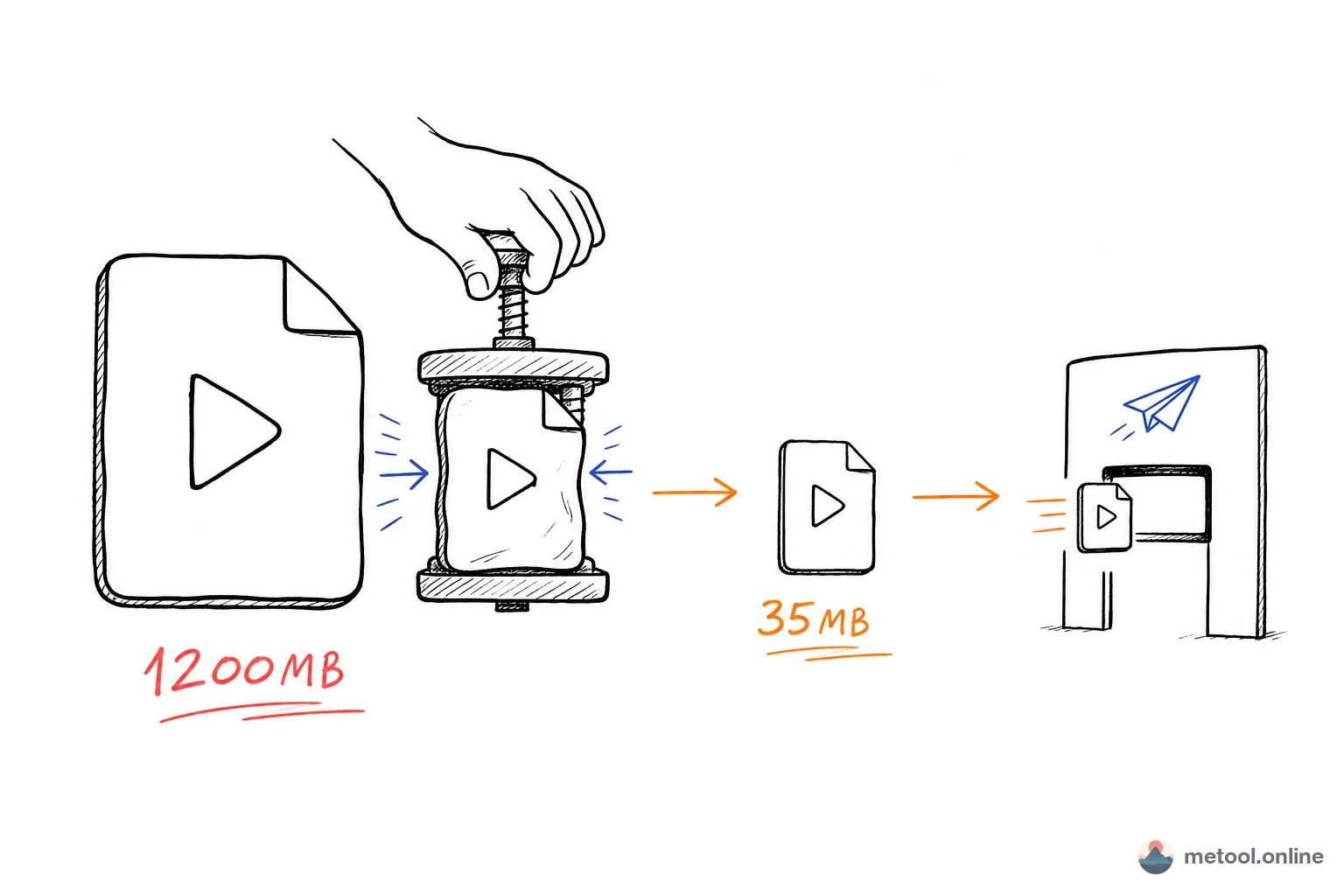
Video Too Big to Send? How to Compress It to Fit
WeChat won't send it, email attachments exceed limits, uploads stall—video size exceeds platform caps. This article explains why videos are so large, how small you need to go to send, resolution and compression settings by scenario (WeChat/email/Xiaohongshu/TikTok), and how to balance quality vs. size.
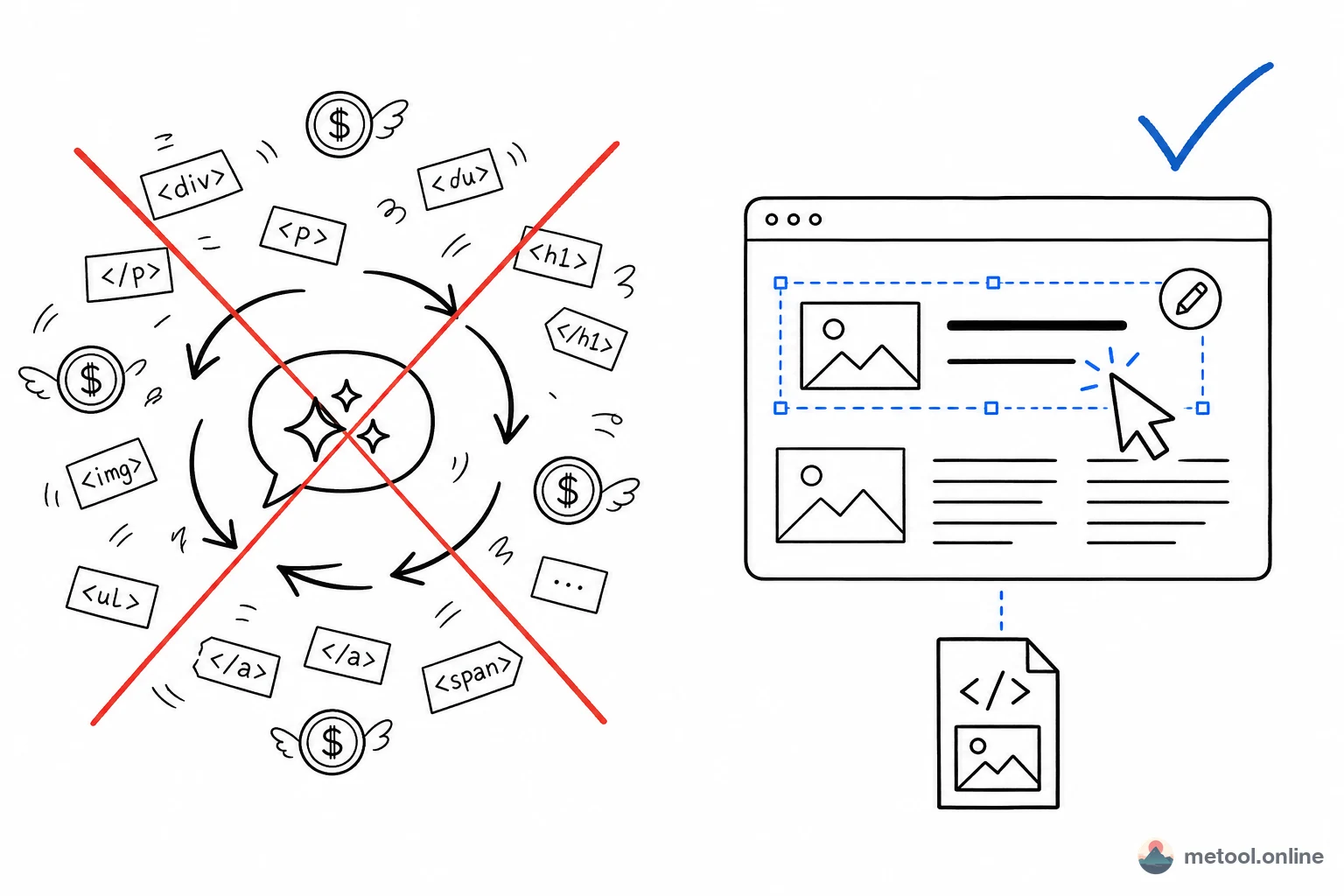
Need to Change One Word on an AI-Generated Page—Re-Prompt or Edit Directly?
ChatGPT/Claude HTML landing pages, reports, and slides are often 90% right—one headline, image, or paragraph off. Re-prompting is slow, burns tokens, and can break what already works. This article explains why you should not go back to the prompt, and how to edit HTML without writing code.
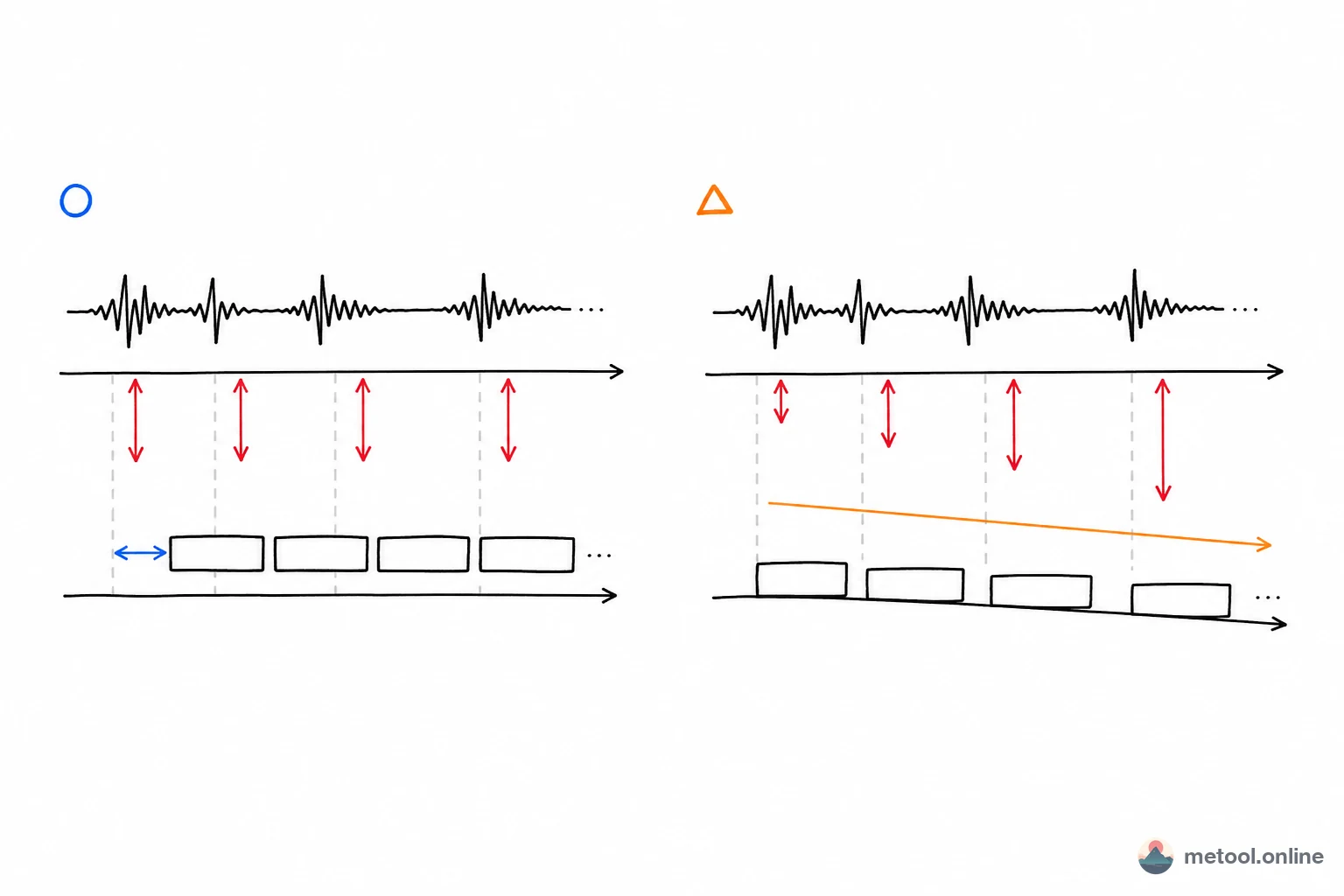
Subtitles Out of Sync? First Identify Which Kind
Downloaded subtitles half a beat slow, or fine at the start but drifting later? Out-of-sync subtitles have three distinct causes and three fixes. This article shows how to tell which you have and fix SRT/VTT/ASS in seconds.
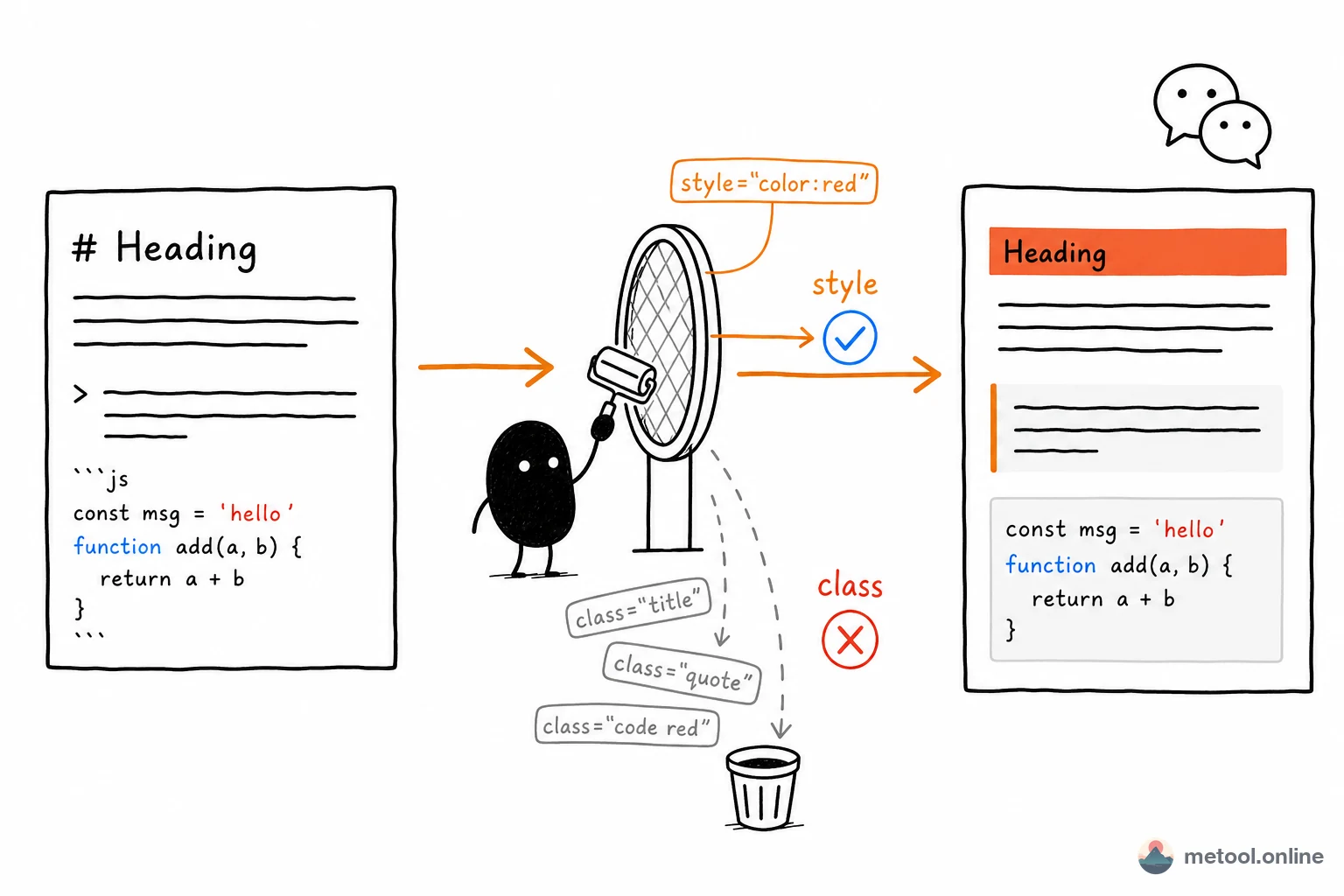
Writing WeChat Articles in Markdown—Why Does Pasting Lose Styles?
WeChat’s editor does not parse Markdown: raw source shows hashes, and preview HTML often loses CSS. This article explains inline styles as the real requirement, and how to keep .md as source until publish.
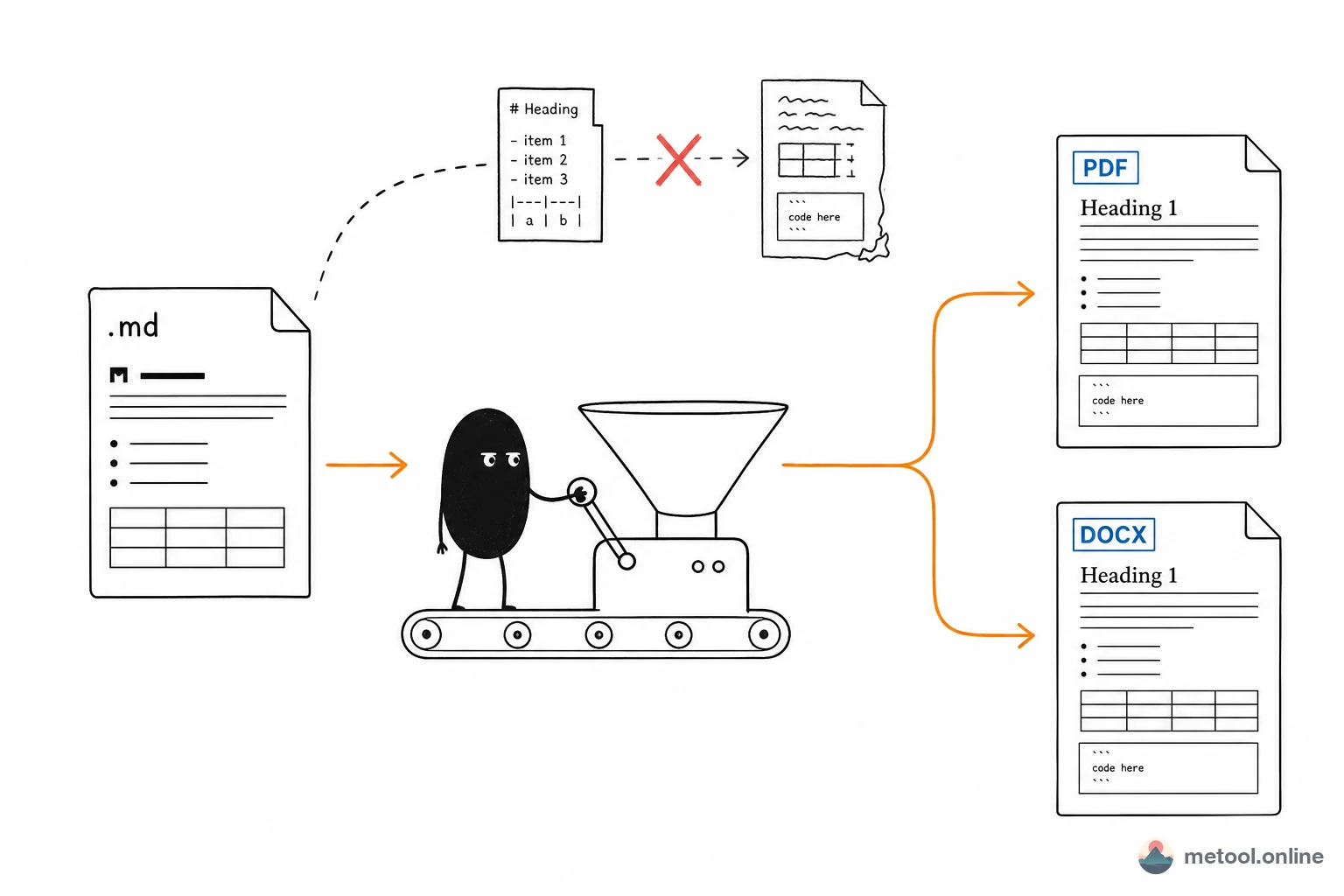
You Write in Markdown—How Do You Deliver Word or PDF?
Clients and advisors want Word or PDF, not a .md file. This article compares paste, pandoc, and browser conversion, when to pick Word vs PDF, and where tables, code, and TOCs break.
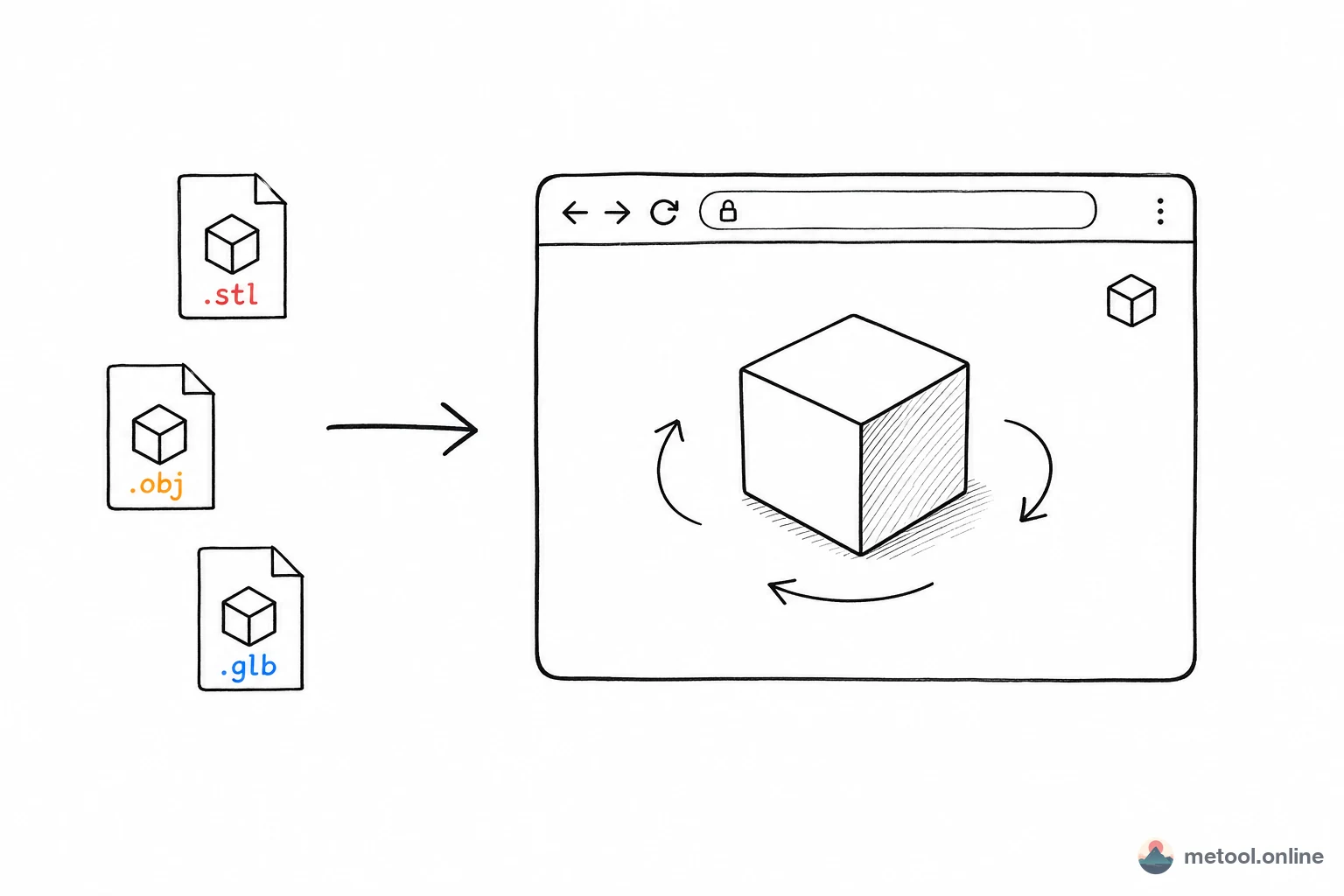
Someone Sent You a .stl/.obj/.glb File—How Do You Open It?
Got STL, OBJ, GLB, FBX, or USDZ with no professional software installed? This article explains what each format stores, why some lack color or animation, and how to view and convert in the browser without installing anything.
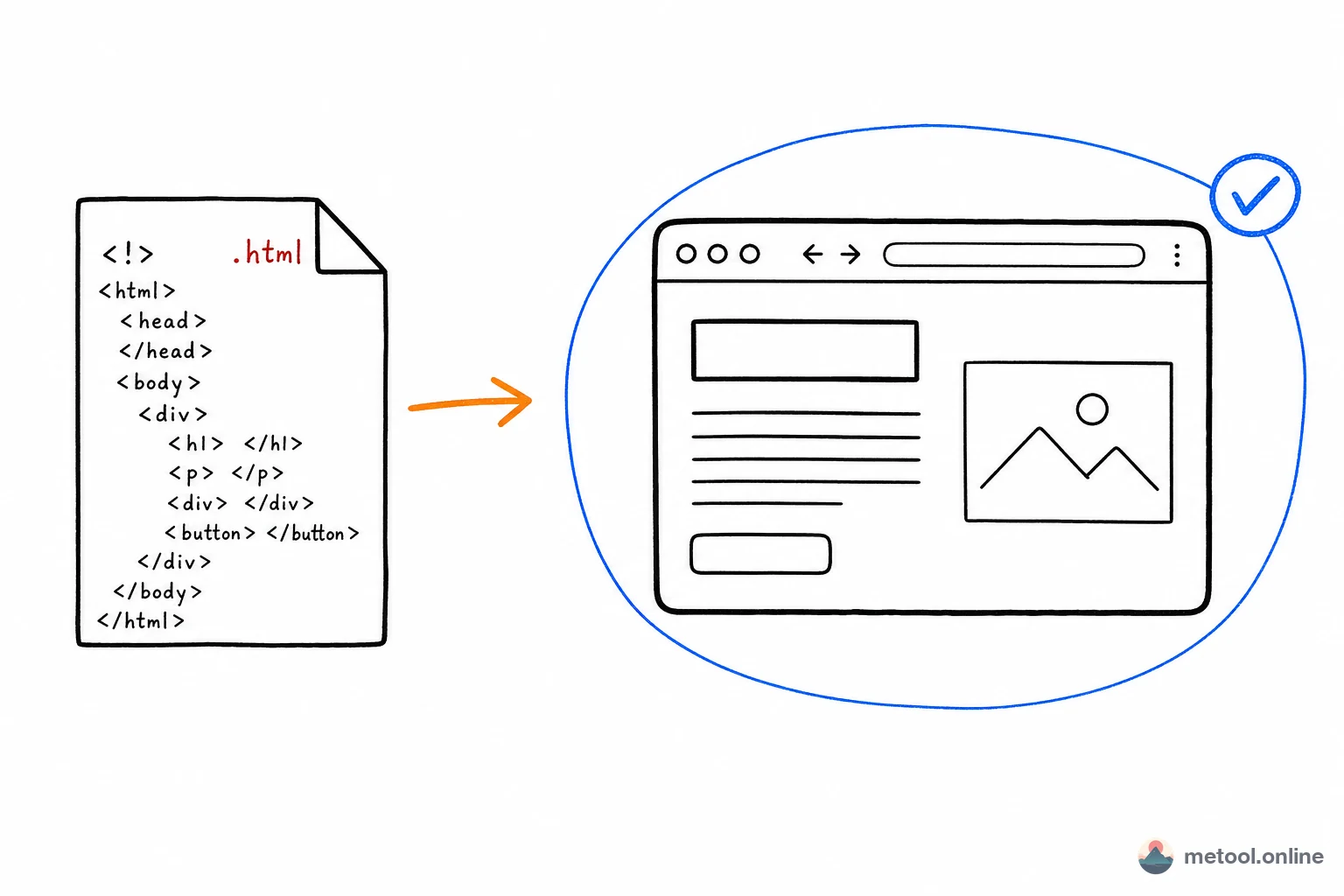
How Do I Open an .html File Someone Sent? The Right Way to Preview Online
On Windows, double-clicking .html often opens Notepad or VS Code; on a Mac it may open TextEdit. Tags are not corruption. This article separates source from render, and what to do when images break.
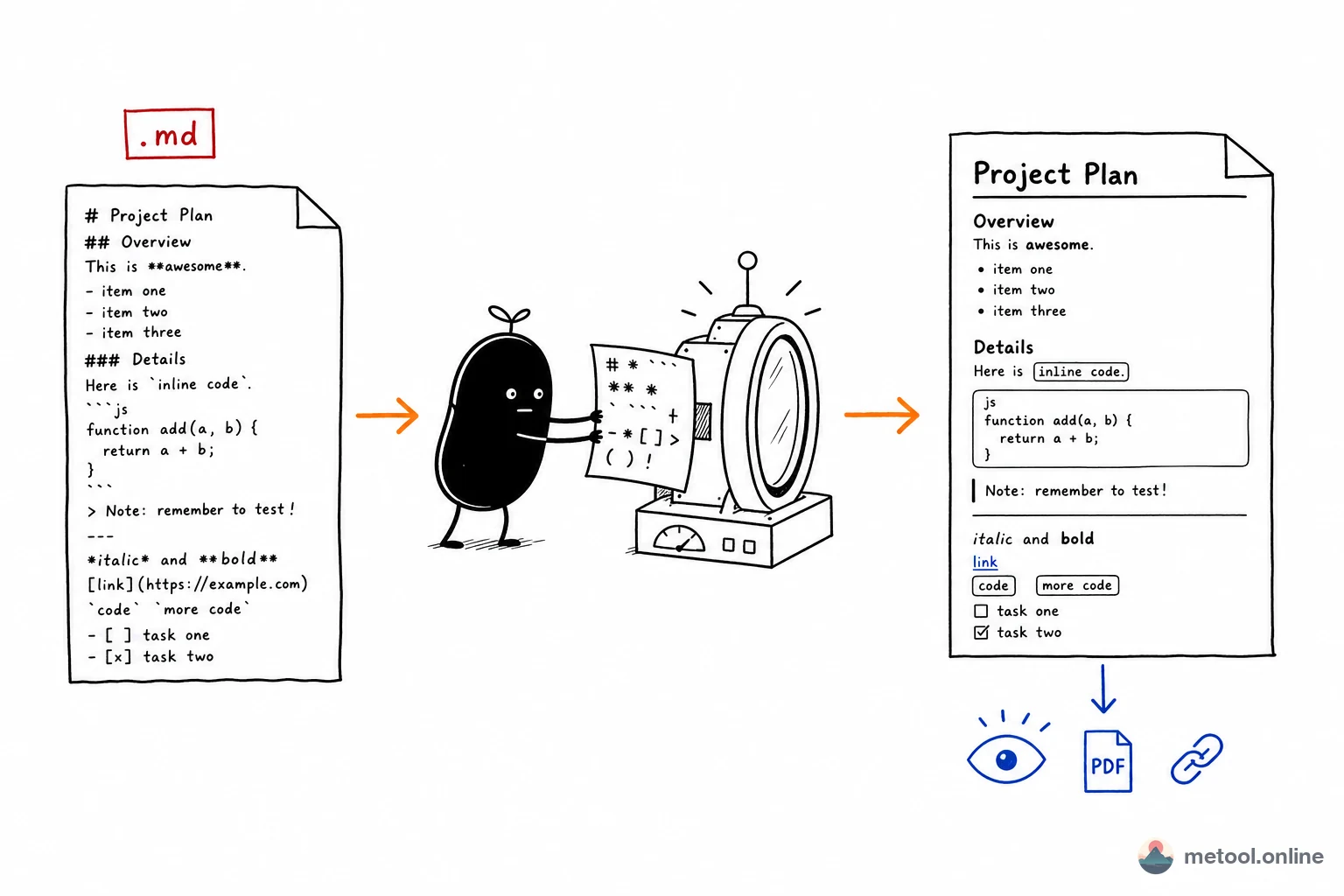
How Do I Open a Downloaded .md File? Three Ways to Preview and Share
On Windows a double-click often opens Notepad; on a Mac, TextEdit—hashes are not corruption. This article separates source from layout, then how to preview, export to Word/PDF, and send a file to someone who does not use Markdown.
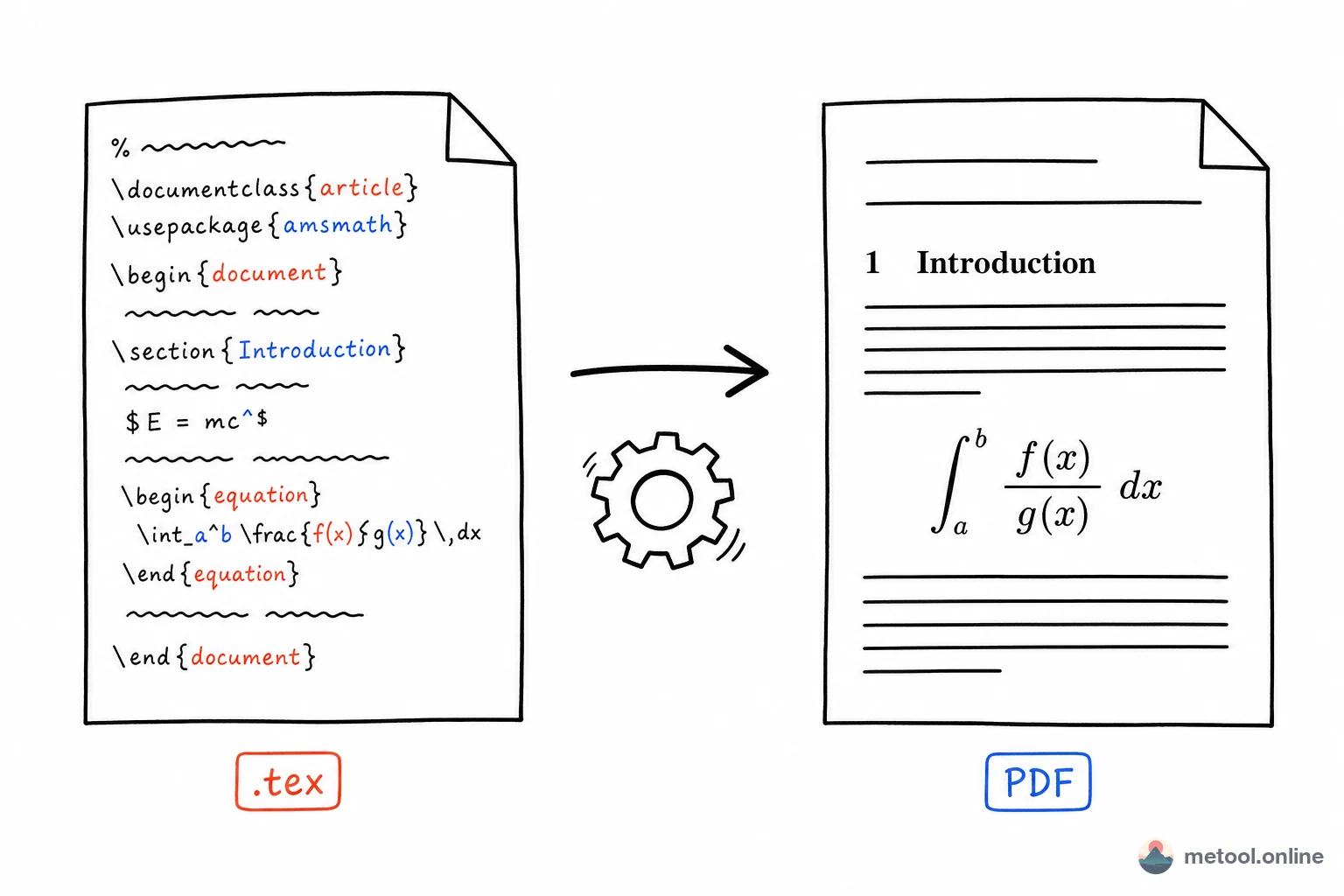
How Do I Open a Downloaded .tex File? First Understand Why It Won't Open
On Windows, double-clicking .tex often does nothing or opens Notepad; on a Mac it often opens TextEdit. Backslashes are not corruption. This article separates source from compile, and where preview versus PDF export belong.
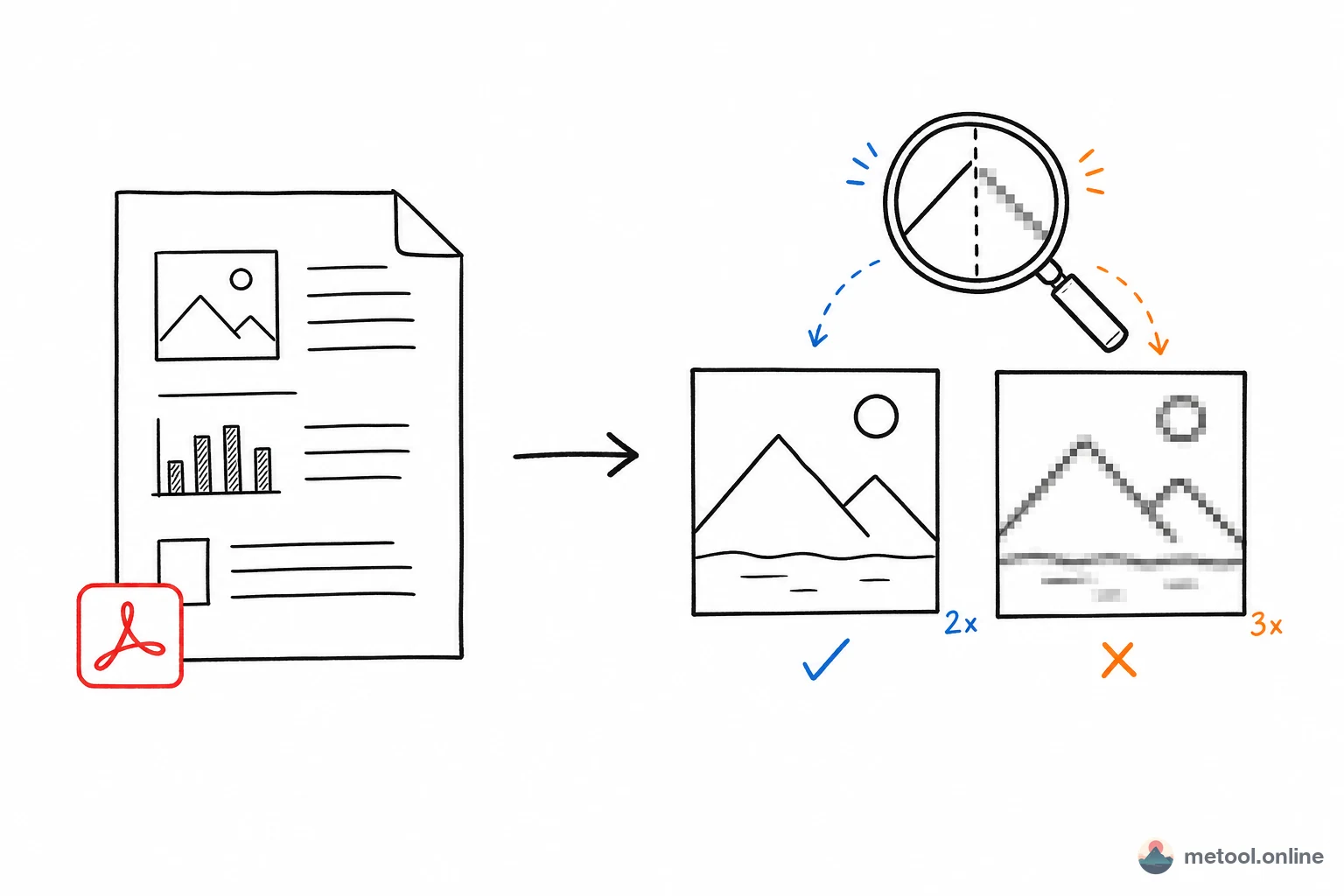
How to Export PDF Pages as Sharp Images
Turn PDF pages into images for WeChat, long-image posts, design assets, or PPT inserts. This article covers why convert, text vs. scanned PDF differences, PNG vs. JPG, resolution settings, and what you lose.
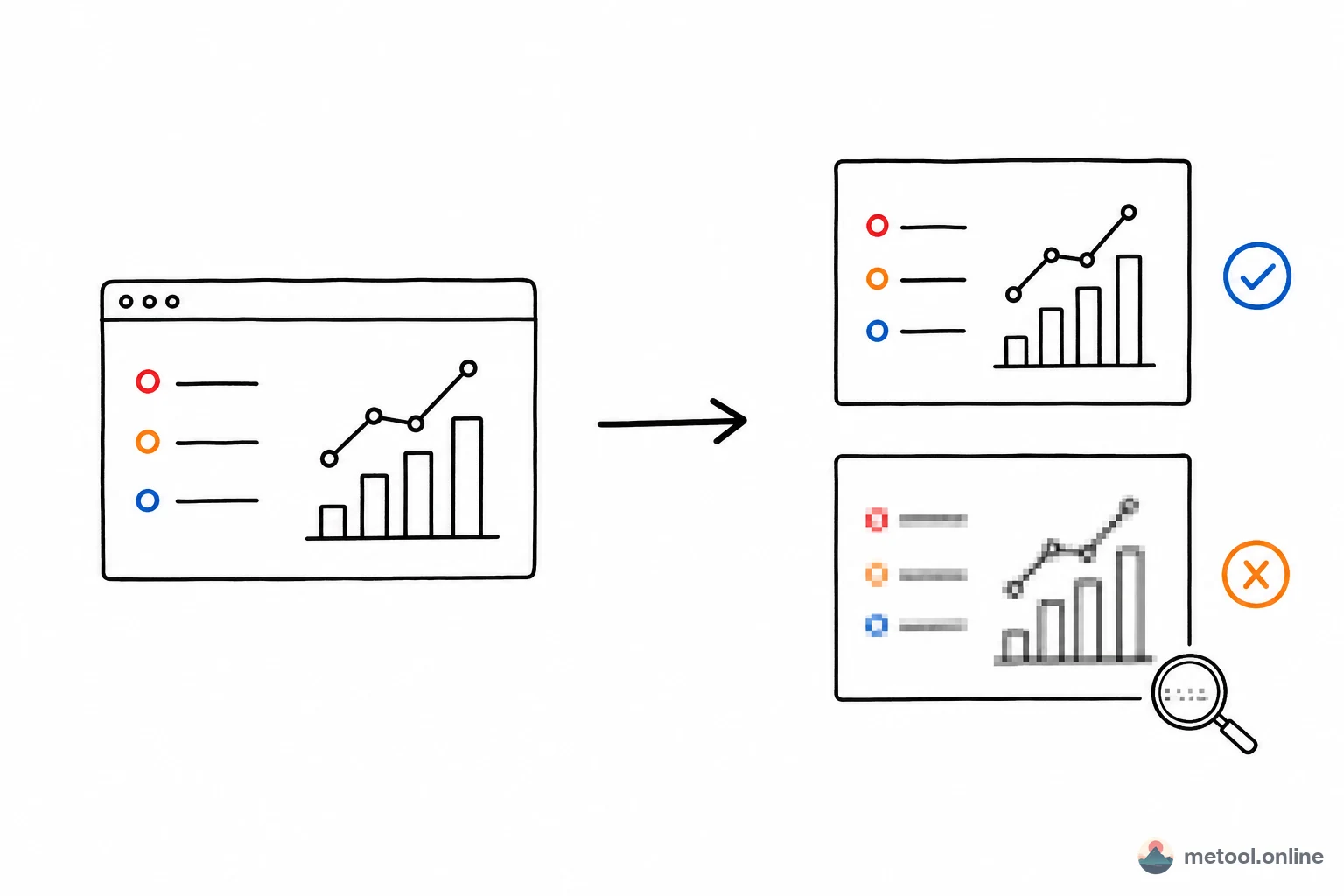
How to Export PPT Slides as Sharp Images
Save each PPT slide as an image for WeChat, mobile viewing, video backgrounds, or Word inserts. This article covers why convert, PNG vs. JPG, resolution, font substitution layout drift, and when conversion fails.
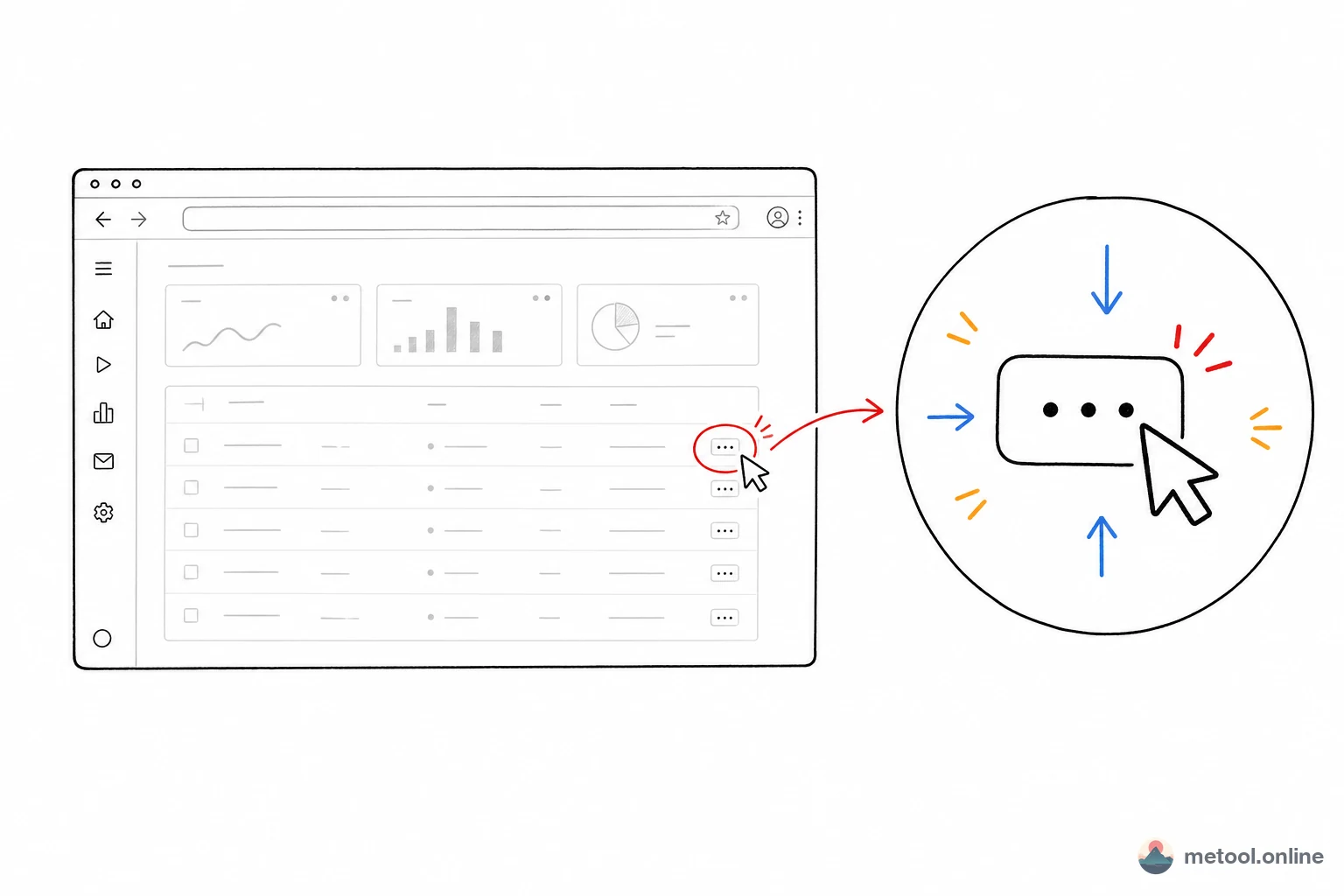
Viewers Can't Find the Action in Your Screen Recording—What to Do?
Full-screen recordings hide where you clicked or edited. This article explains why detail gets lost, how dynamic focus (auto zoom) guides attention, plus speed, silence removal, and background polish—with a tool selection table.
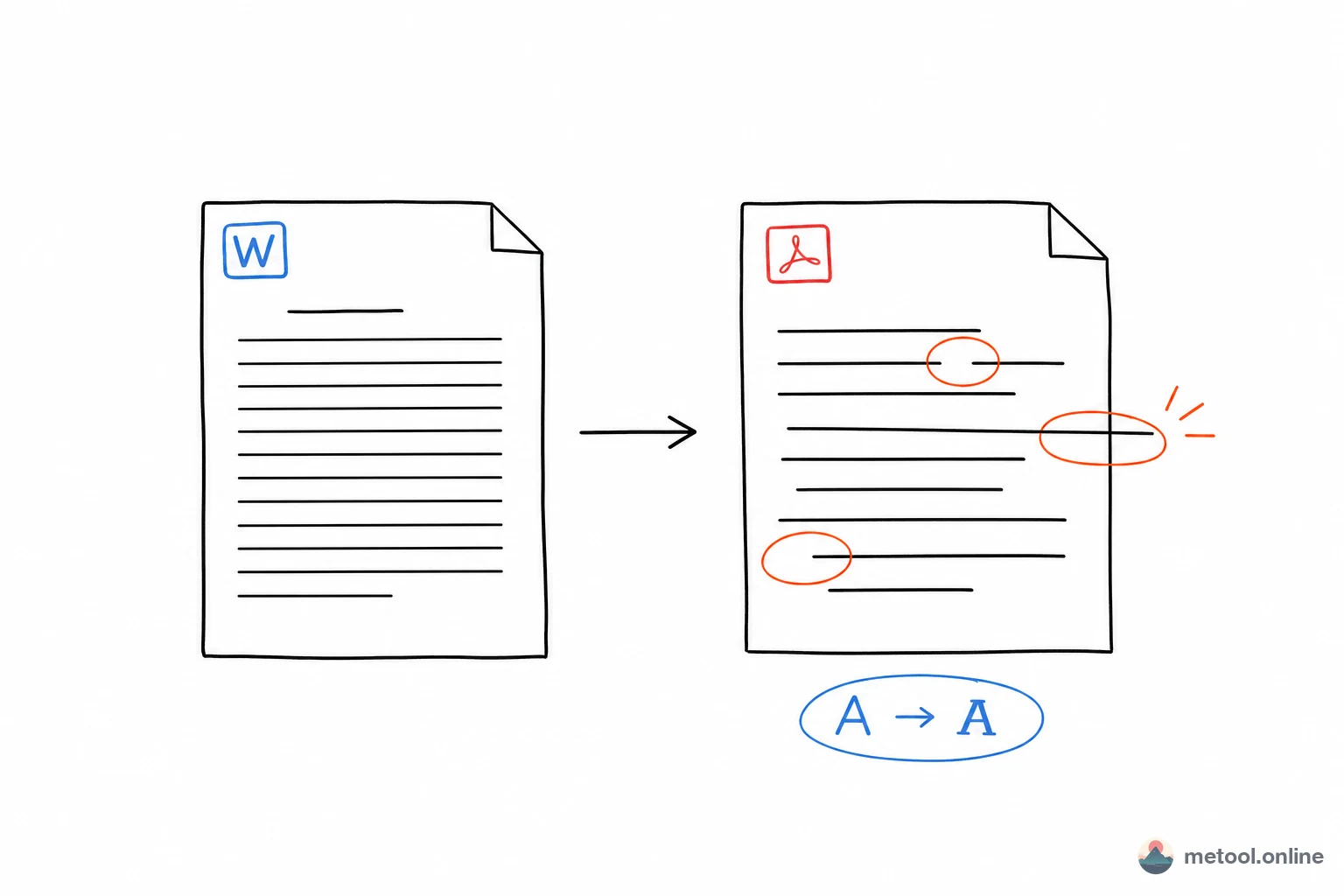
Why Does Word-to-PDF Break Layout and Fonts?
After Word to PDF, wraps shift and fonts swap because the file stores font names and wraps are computed from widths. This article covers when change is inevitable, how to preserve fidelity, and when to lock pages as images.
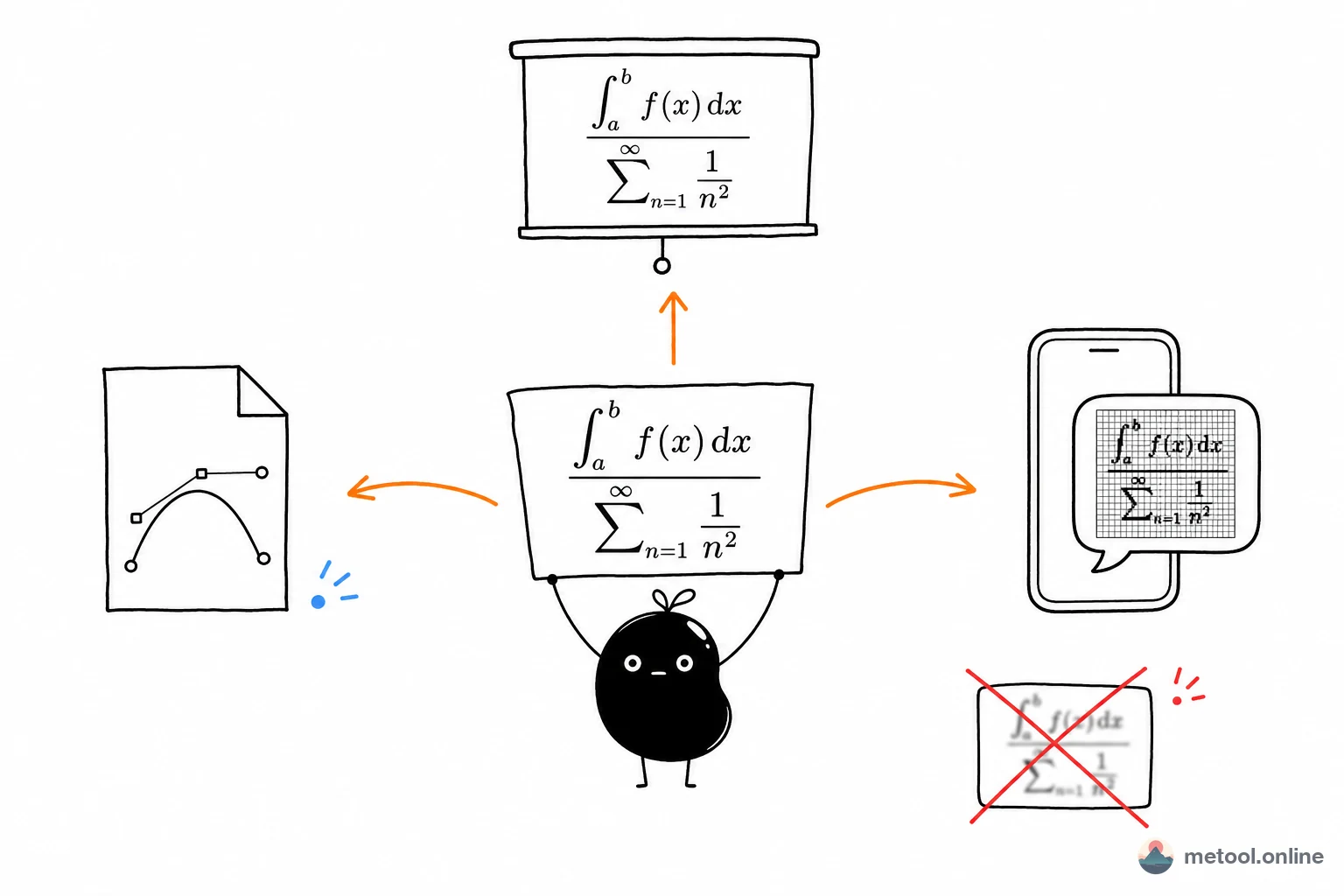
How to Insert Math Formulas in Word, PowerPoint, and WeChat Articles—Write Once, Reuse Everywhere
Word's equation editor is slow for complex formulas, PPT screenshots blur when scaled, and WeChat articles don't support equations. This article explains each platform's limits and a stable workflow: write in LaTeX once, export the right format per platform.
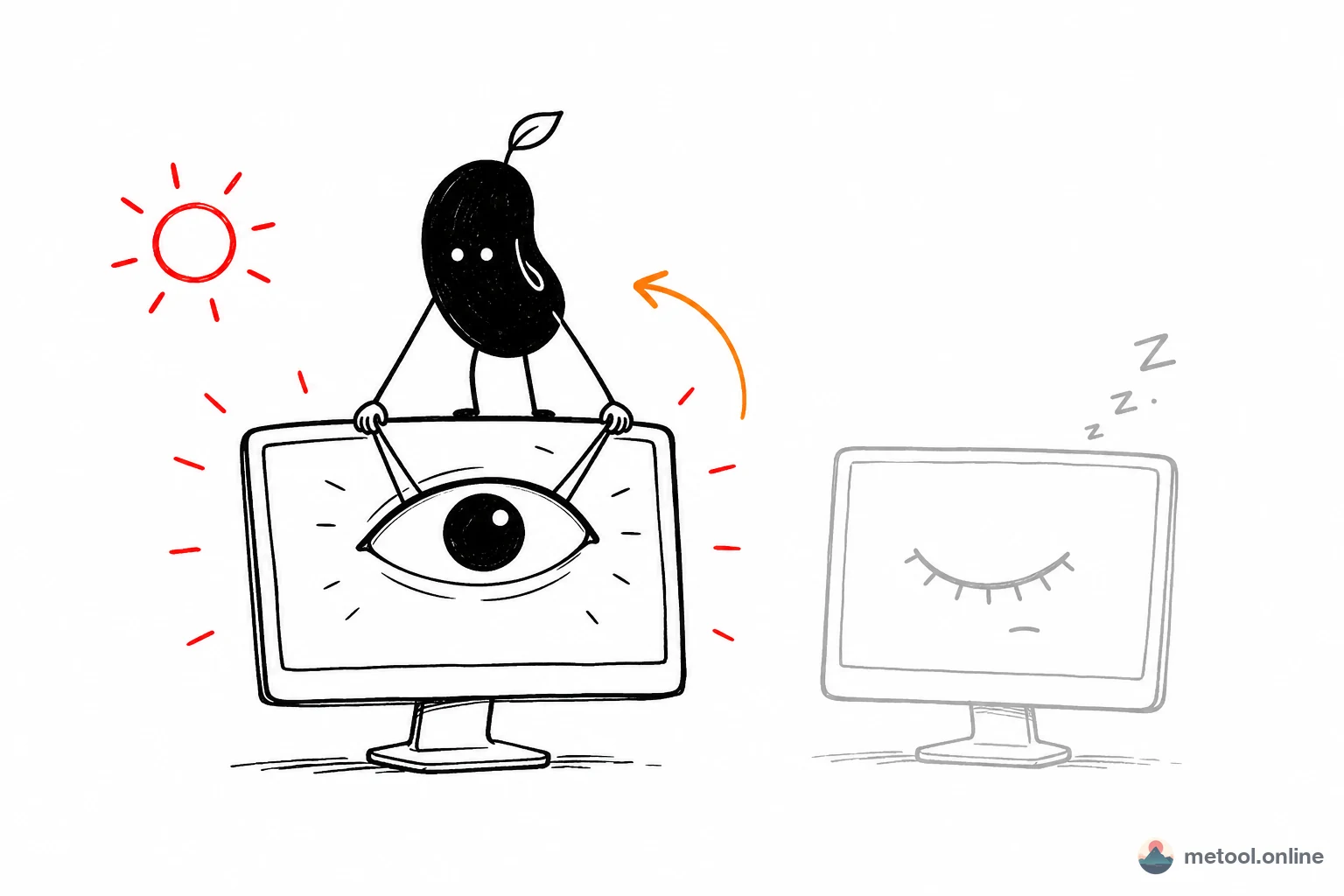
Screen Keeps Dimming While Waiting for AI or Presenting? Temporary Keep-Awake Options
Auto sleep saves power—but sometimes you only need the screen on for a while. This article explains why screens dim, the tradeoffs of system settings vs apps vs browser keep-awake, and the easiest 'use and revert' approach.
LaTeX to PDF Without TeX Live? Know the Limits of Online Conversion First
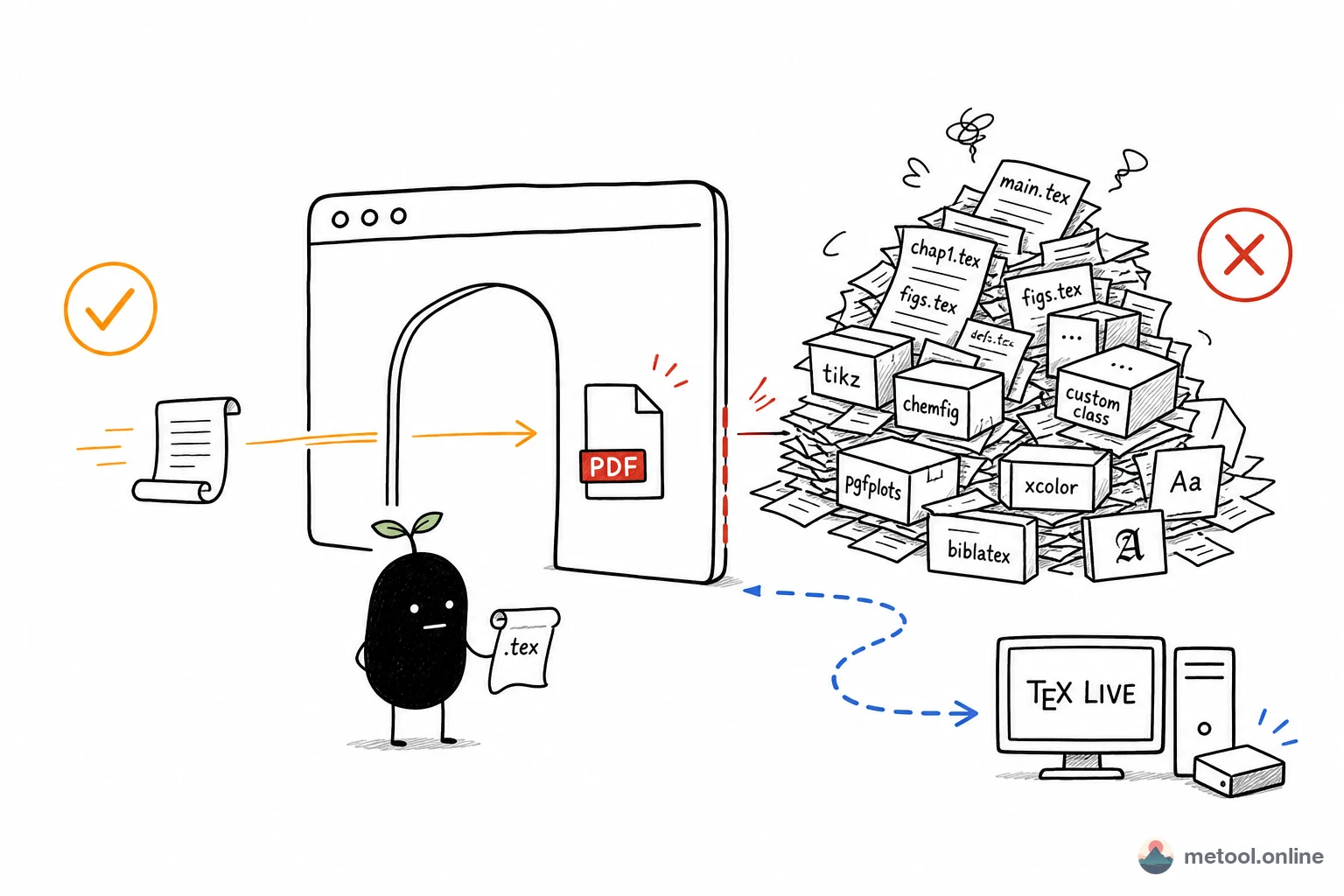
Installing several GB of TeX just to export one PDF is poor value. This article explains how LaTeX becomes PDF, what online conversion can and cannot do, and how to choose for everyday vs heavy projects.